


Smart #2 brings luxury back to the two-seat city car

Ryenne Brewer
Author of the post
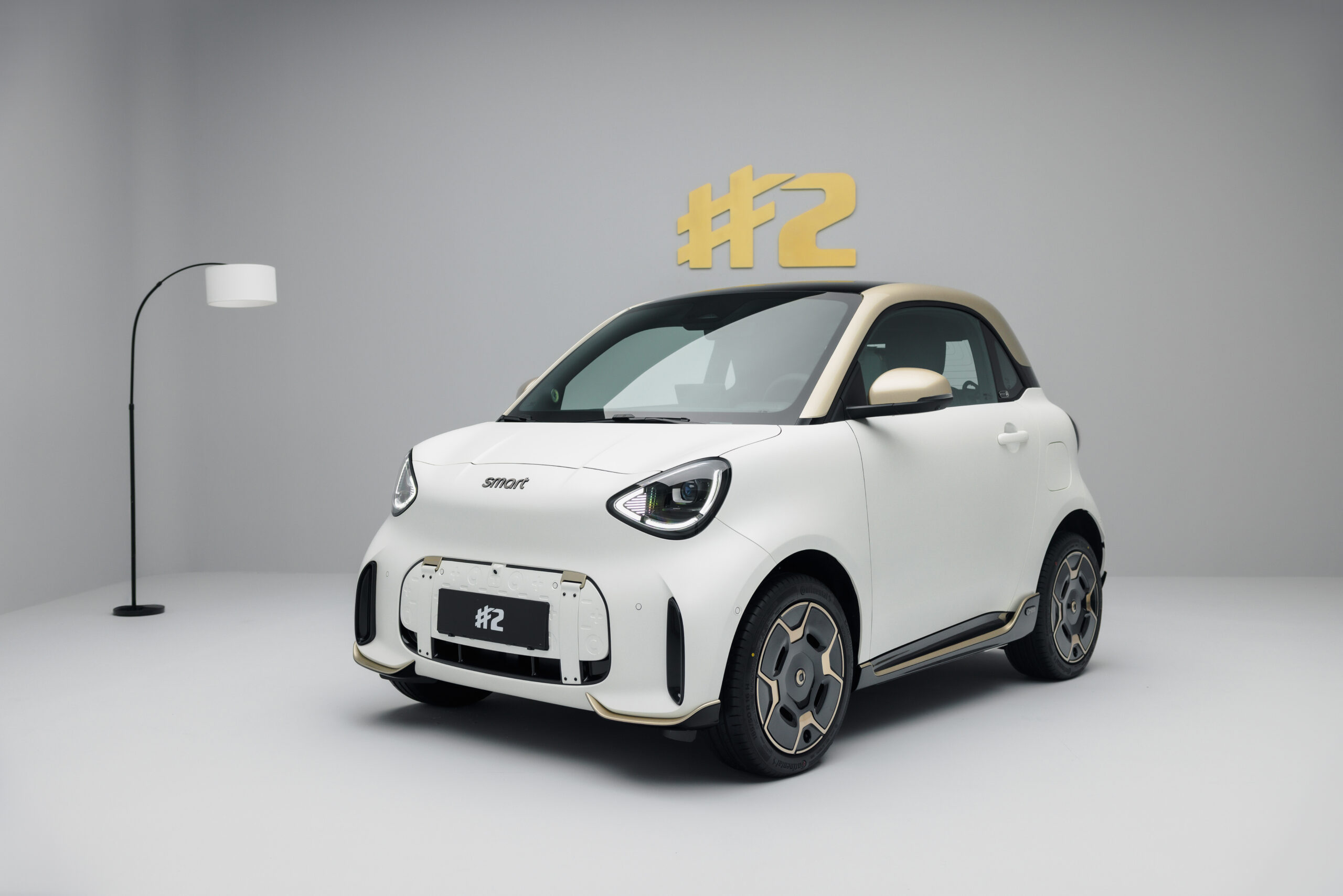
The Smart #2 has been unveiled at the 2026 Paris Motor Show, reviving the brand’s original two-seat city-car formula with electric power, a more sophisticated chassis and an unusually lavish cabin. At 2,746mm long, it remains a genuinely tiny car, yet Smart is pitching it as something rather more considered than a basic urban runabout.
That is the appealing part. Electric cars have often grown in size and mass in pursuit of range, equipment and premium positioning, leaving buyers who simply want a compact, manoeuvrable city car with limited choice. The Smart #2 suggests that small dimensions need not mean a pared-back experience.
It retains the familiar wheels-at-the-corners stance, short overhangs and upright two-seat proportions associated with the original Fortwo. The styling has been overseen by the Mercedes-Benz Global Design Team, with softer surfacing, contemporary lighting and a floating-roof treatment giving the little Smart a more mature appearance without losing its recognisable silhouette.
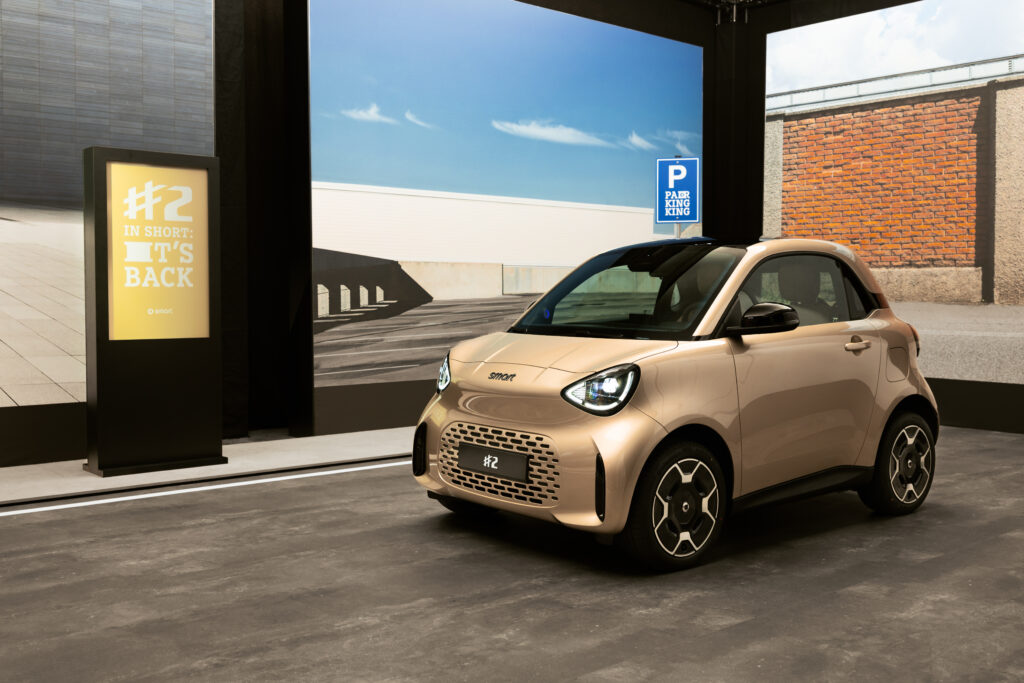
A compact electric platform with rear-wheel drive
Beneath that compact body is Smart’s new Electric Compact Architecture, developed specifically for the #2. A rear-mounted electric motor produces 60kW and 130Nm, sending its output to the rear wheels. Power comes from a 35.8kWh lithium iron phosphate battery, with a preliminary WLTP range claim of up to 290km.
For a car intended chiefly for urban use, that figure should give it considerably more scope than a short school run or supermarket circuit. It is still a manufacturer claim, and real-world range will depend on conditions and driving style, but the quoted WLTP number gives the #2 potential to handle routine commuting without becoming a daily charging exercise.
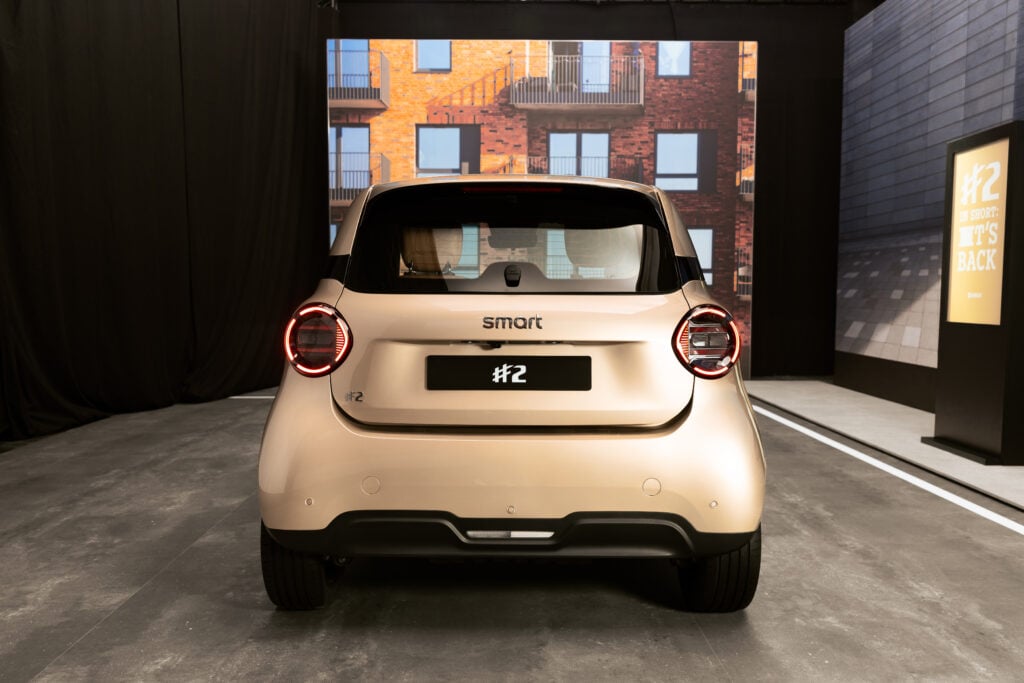
DC charging is supported at up to 65kW, with Smart claiming a 10 to 80 per cent charge in around 20 minutes under optimal conditions. That is not headline-grabbing by the standards of large premium EVs, though it is a sensible provision for a battery of this size and a car likely to spend much of its life close to home.
More intriguing is the chassis. Smart says the #2 uses a five-link rear suspension arrangement, described as a first in its class, alongside its low-mounted battery and rear-wheel-drive layout. It also has a 6.95-metre turning circle, which ought to be useful in precisely the cramped streets and tight parking spaces for which the car has been conceived.
Whether the suspension translates into a genuinely polished ride remains to be seen until the car is driven. Still, it is encouraging that Smart appears to have considered more than the bare minimum required to make a small electric car move through traffic.
Premium equipment in a very small footprint
The cabin is where the Smart #2 makes its most ambitious case. Smart has fitted a bench-style seating arrangement, an S-shaped dashboard and two digital displays measuring 10.1 inches and 8.8 inches. The Premium specification adds heated synthetic-leather seats, a fixed panoramic-style glass roof and a seven-speaker Sennheiser sound system.
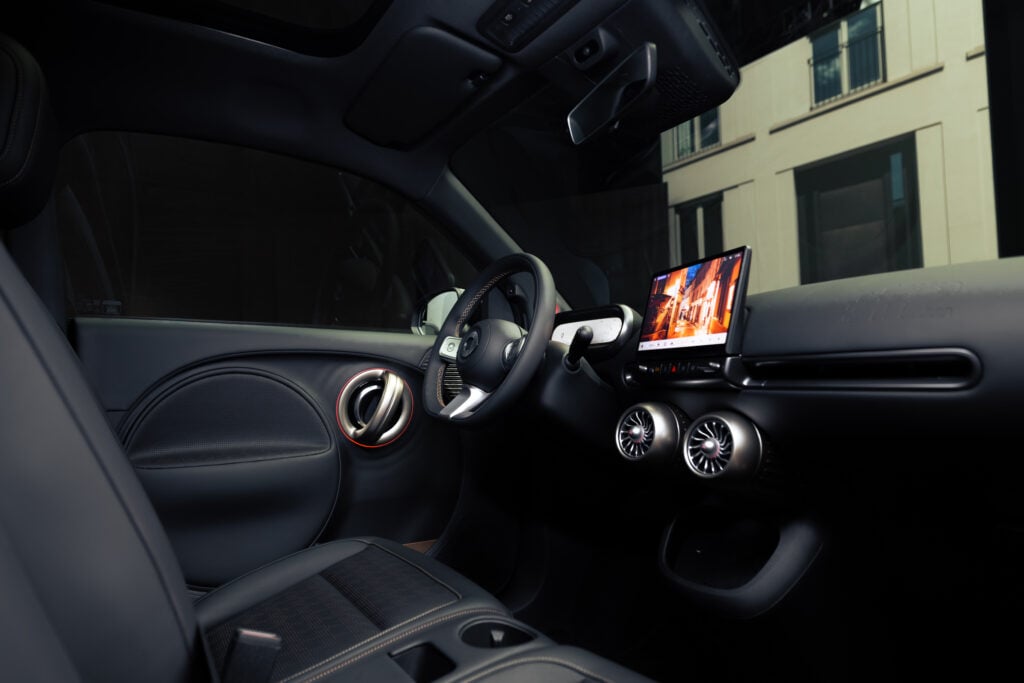
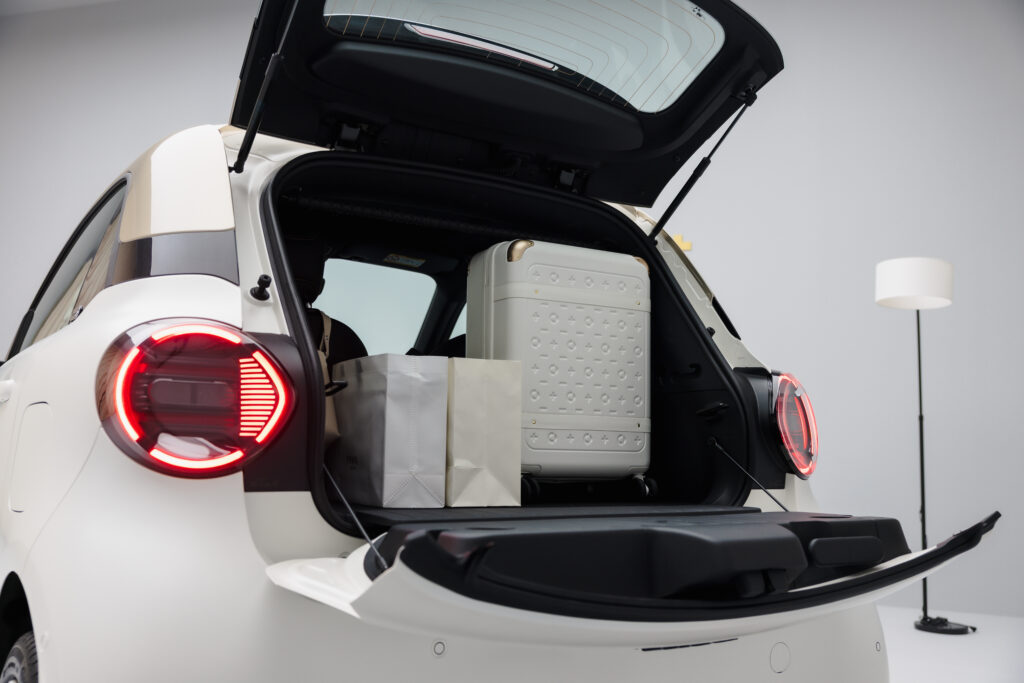
That is a serious equipment list for a car shorter than many conventional hatchbacks. Smart has also retained the split tailgate concept of the original, while fitting the latest version of its Tridion safety cell. Driver assistance systems include adaptive cruise control with stop-and-go capability, Highway Assist and Smart Pilot Assist.
European buyers will be offered Pure, Pure+ and Premium versions. German pricing starts at €19,990 for the entry-level model, while the Premium is priced from €24,490 before applicable delivery and registration costs. Early European orders opened on 13 October, with wider market availability due in 2027. Australian pricing and availability have not been confirmed.
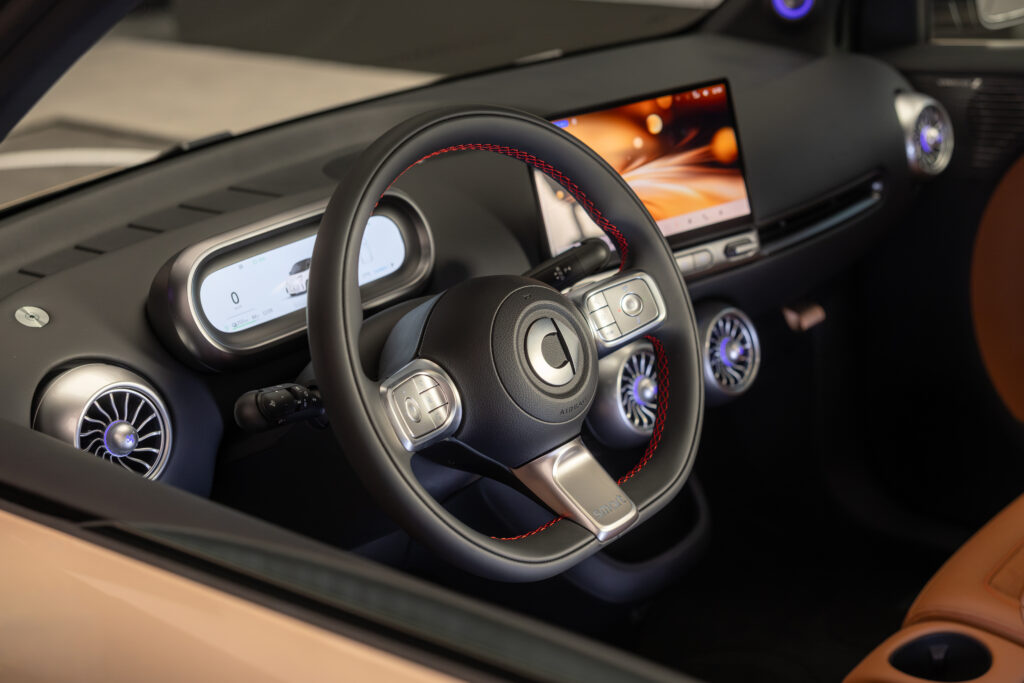
There is also a 999-unit European Couture Edition, finished in Atelier White Matte with a Platinum Gold roof and 16-inch wheels carrying gold detailing. Its cabin adds ambient lighting, heated seats and steering wheel, wireless charging, navigation, the Sennheiser audio system and an individually numbered badge. At €25,690, it is an extravagantly specified city car, which is rather the point.
The Smart #2 will need to prove its refinement, ride quality and everyday usability on the road. On paper, though, it has identified a neglected niche: the buyer who wants a properly compact electric car without accepting a bargain-basement interior or the bulk of a large SUV. That is a surprisingly persuasive proposition.
latest Stories
 Read full story

Join Our Community
Stay up to date with our latest stories, fresh insights, and special updates. Subscribe to receive carefully selected content delivered straight to your inbox.