


Mercedes-AMG GT SUV Has the Numbers, But Does It Need to Exist?

Callum Tokody
Author of the post
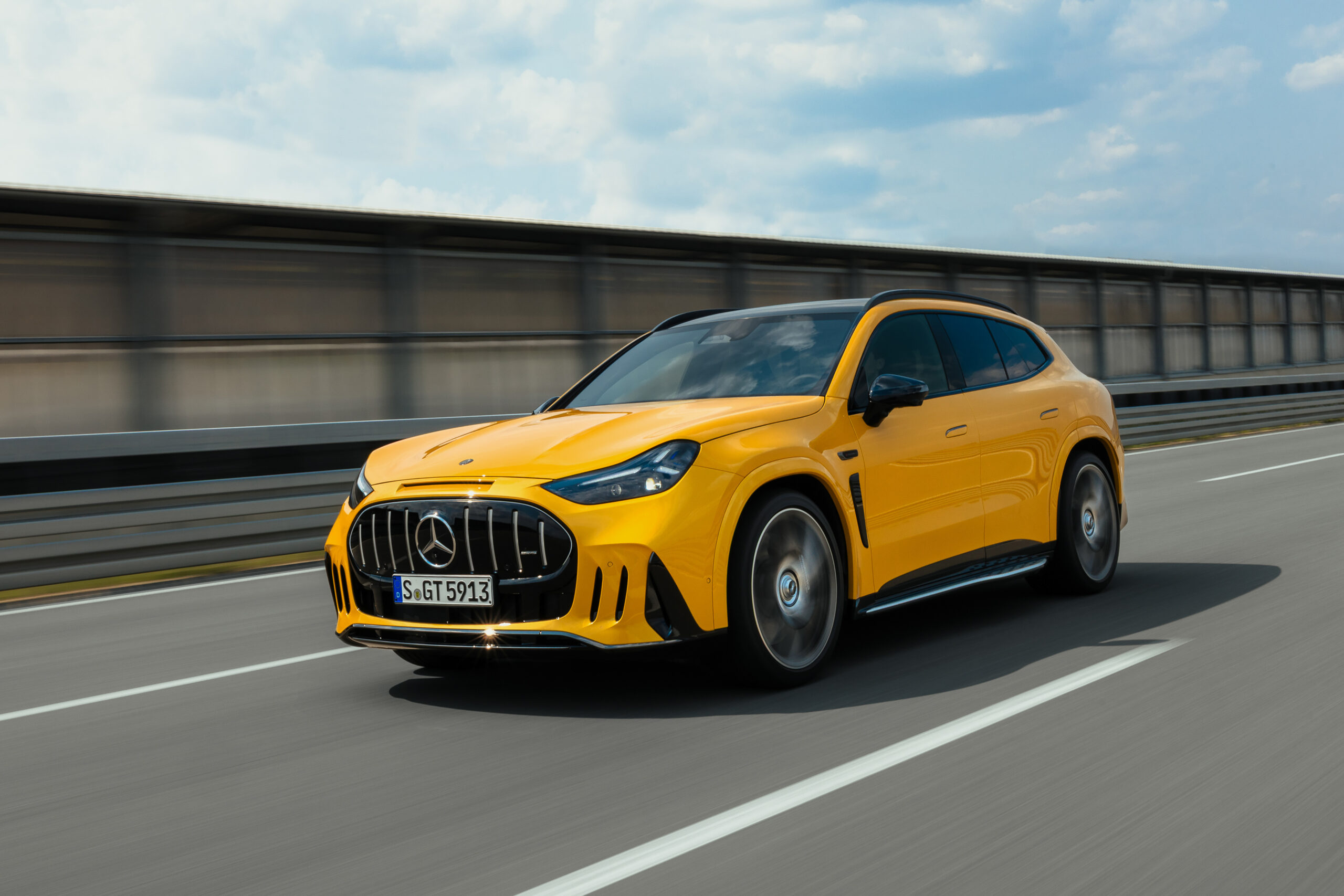
The Mercedes-AMG GT SUV arrives with the sort of numbers usually reserved for hypercars, including up to 1,169 PS and a claimed 0-100 km/h time of 2.7 seconds. It is also an electric SUV with unusually ambitious fast charging claims, potentially adding around 450 km of WLTP range in ten minutes under the right conditions. Yet the BMW XM offers a useful warning that spectacular outputs and divisive styling do not automatically create a convincing luxury performance car. AMG’s new flagship looks more promising, but it still needs to explain why buyers should want an SUV rather than the related GT 4-Door Coupé.
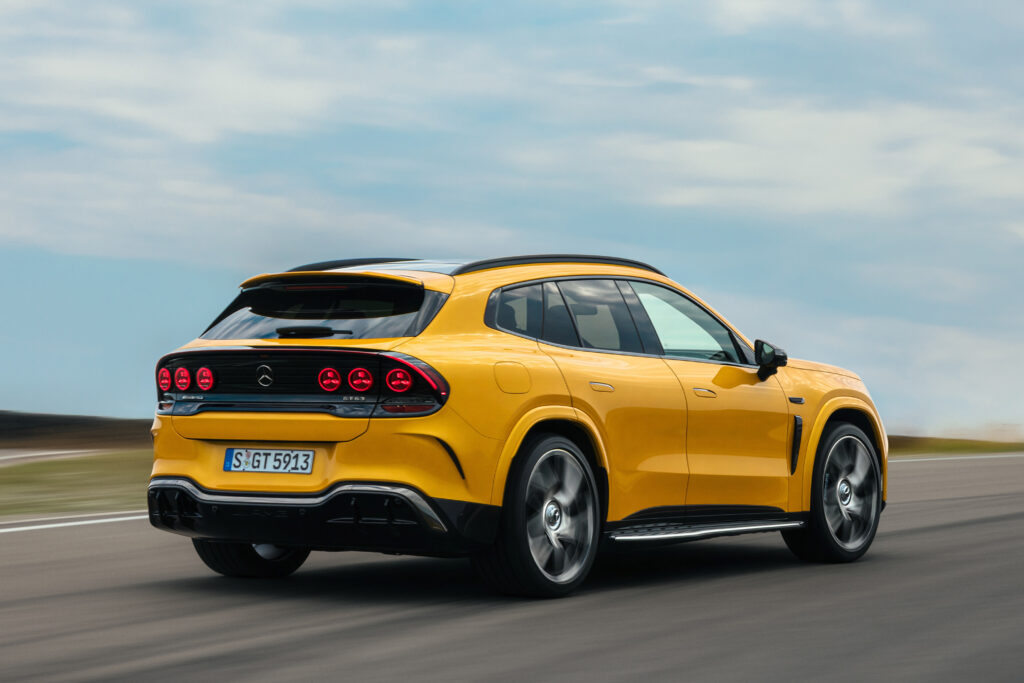
Mercedes-AMG GT SUV design has more charm than the XM
There is something rather likeable about the Mercedes-AMG GT SUV, despite its deliberately unusual proportions. Its steep nose, oversized AMG grille, broad shoulders and relatively low roofline make it imposing, although the overall shape feels more cohesive the longer one looks at it.
I find it considerably more successful than the BMW XM, whose enormous kidney grilles, hard-edged surfacing and awkward proportions appear determined to provoke a reaction. The AMG is hardly understated, but its design seems more resolved, as though its various visual elements were intended to work together rather than compete for attention.
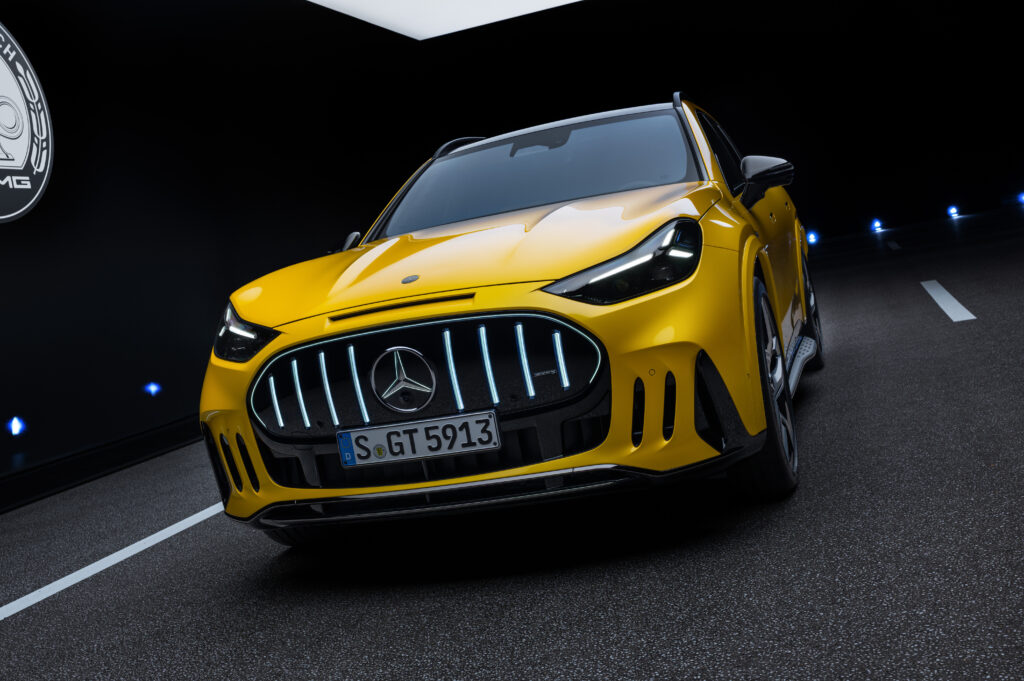
That does not mean Mercedes-Benz has entirely convinced me with its newer electric design language. The traditional S-Class, GLE and GLS still have the quieter confidence that suits the three-pointed star particularly well, but the GT SUV has a distinct personality of its own.
More importantly, this is not simply a GLE fitted with more power and an AMG badge. It is AMG’s first independently developed full-size SUV and the second production model to use the dedicated AMG.EA electric architecture after the GT 4-Door Coupé.
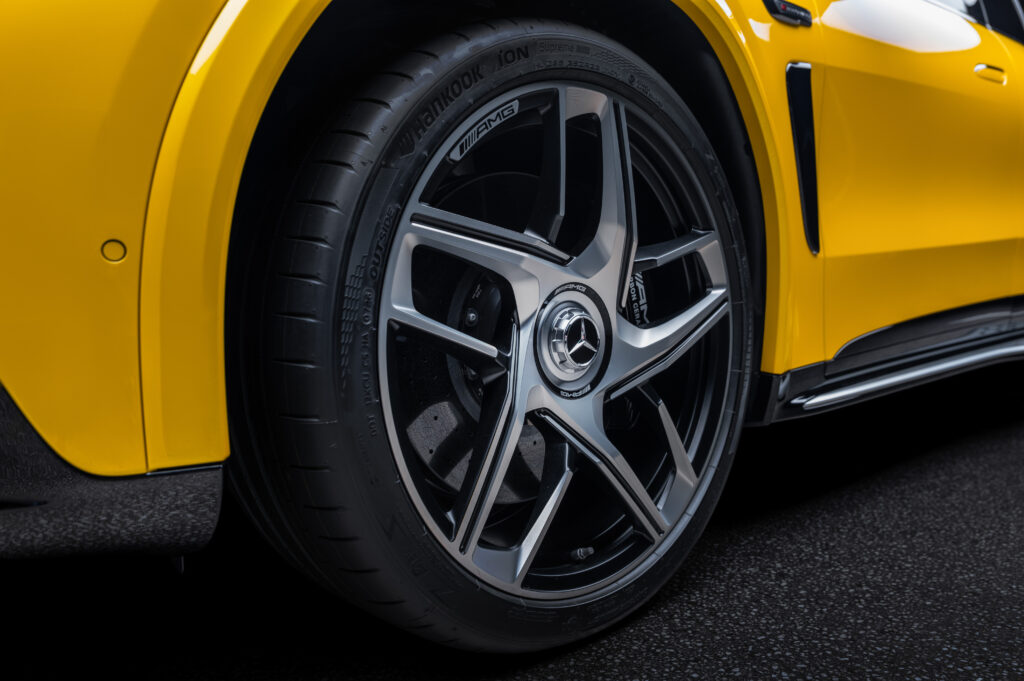
The line-up begins with the GT 53, which uses two synchronous electric motors producing 400 kW, while the GT 55 raises that to 600 kW with three axial-flux motors. The flagship GT 63 combines three axial-flux motors for 860 kW, or 1,169 PS, and up to 2,000 Nm of torque.
Those figures are plainly excessive, particularly in a vehicle weighing between 2,585 kg and 2,695 kg. Still, the more significant claim may be the GT 63’s ability to sustain up to 530 kW, supported by directly cooled cylindrical battery cells and thermal management designed to prevent the powertrain from quickly losing its enthusiasm.
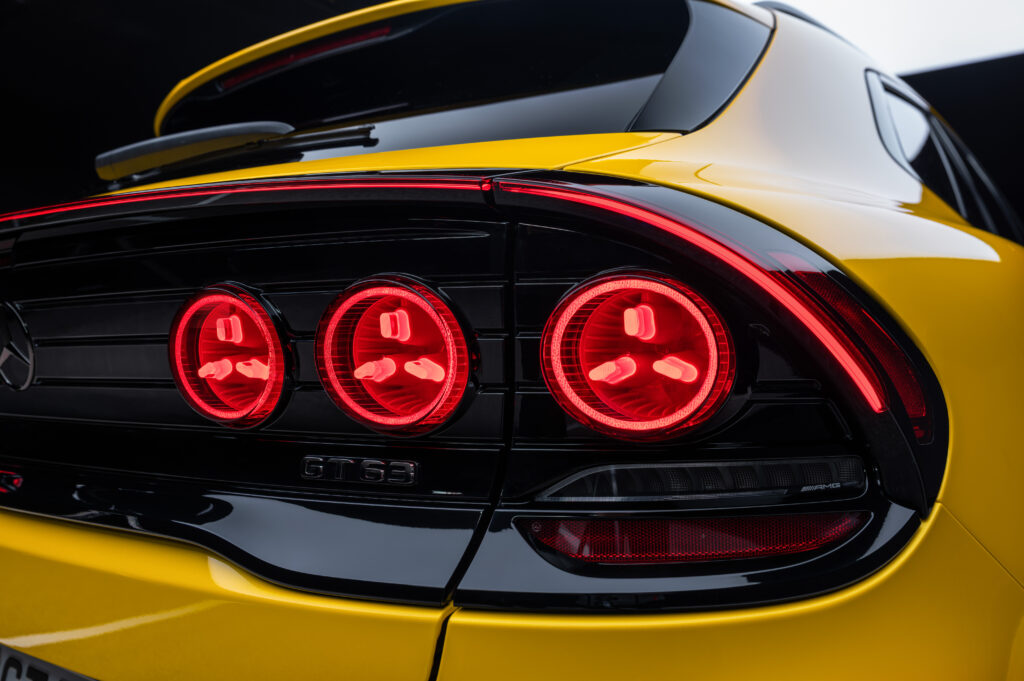
Fast charging and practicality must justify the electric SUV
The Mercedes-AMG GT SUV will be offered with 106 kWh and 128 kWh batteries, with the larger unit delivering a claimed WLTP range of up to 700 km. The smaller pack supports DC charging at up to 600 kW, while the 128 kWh battery can accept up to 710 kW, numbers that make fast charging one of the most interesting parts of the story.
Charging infrastructure capable of consistently supplying that sort of power remains an obvious hurdle, and Mercedes-AMG’s laboratory claims will need independent scrutiny. Nevertheless, if this electric SUV can regularly replenish a meaningful amount of range in something approaching ten minutes, that matters far more than shaving another fraction from a launch-control sprint.
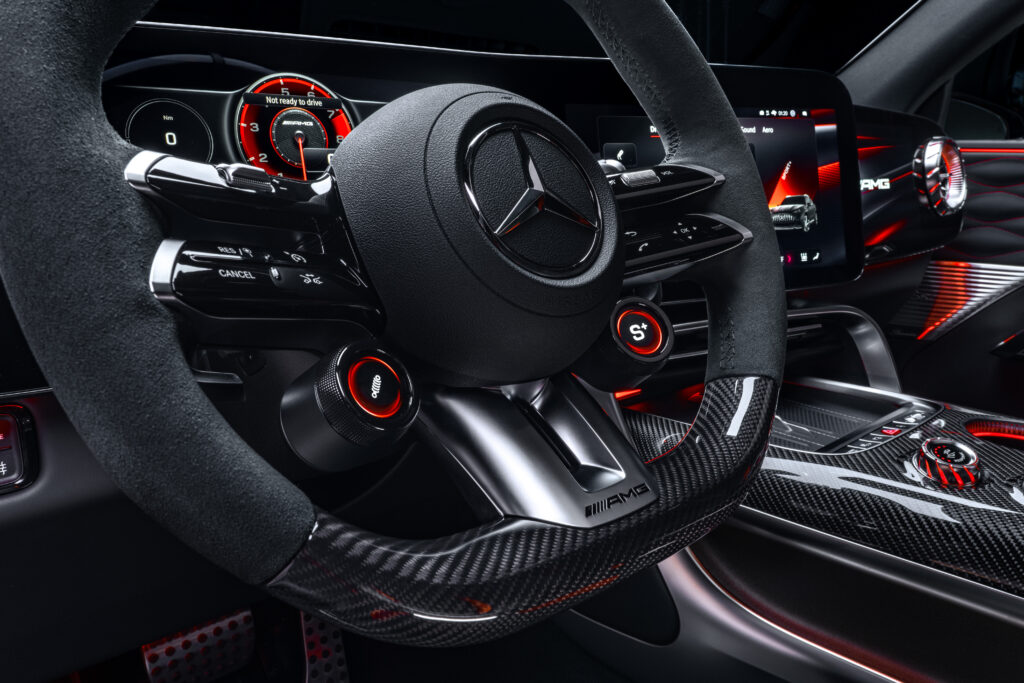
The mechanical arrangement is equally ambitious, with two rear axial-flux motors receiving individual transmissions and a front motor able to disconnect during lighter driving. Together with fully variable AMG Performance 4MATIC+ all-wheel drive, it should give AMG considerable control over how torque is distributed, although engineering potential is not the same as a satisfying driving experience.
AMG has also fitted ACTIVE RIDE CONTROL+ suspension, using hydraulically interconnected dampers instead of conventional anti-roll bars, alongside rear-wheel steering with up to six degrees of counter-steering at low speed. On paper, that should help disguise some of the mass, but no suspension system can entirely negotiate with the laws of physics when more than 2.5 tonnes enters a demanding corner.
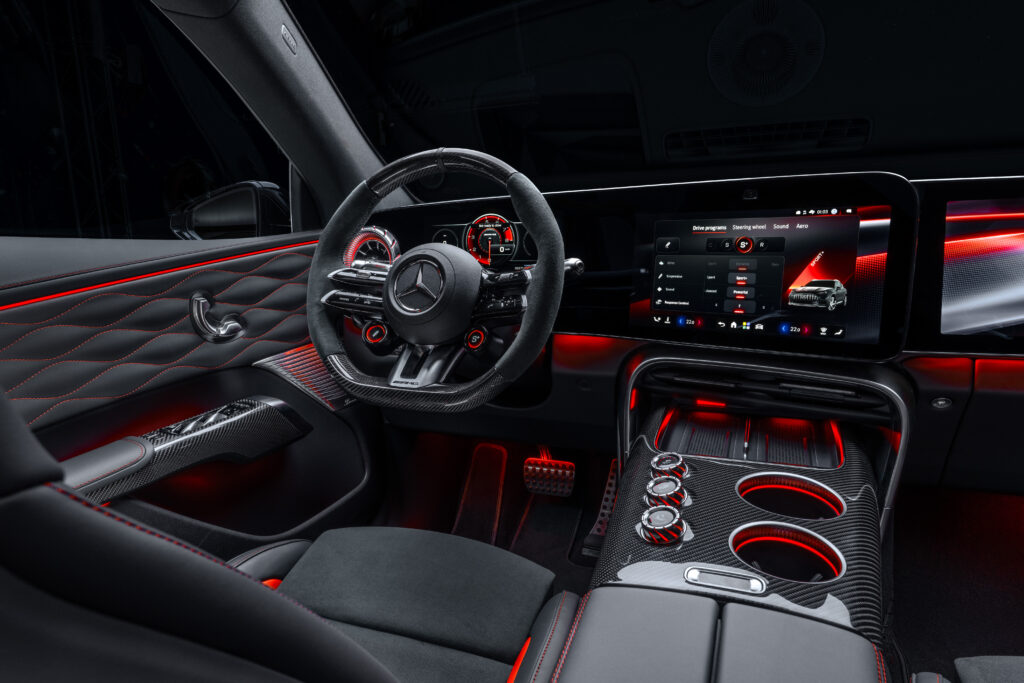
Comfort may be the more important test, because a luxury performance SUV should not turn every motorway journey into a technical demonstration. The BMW XM showed that a vehicle can be rare, expensive and immensely powerful without becoming especially desirable, and AMG needs to ensure its newcomer feels refined as well as ridiculous.
The GT SUV does at least appear to have a practical argument, with 607 litres of luggage space, expanding to 1,740 litres with the rear seats folded, plus a 78-litre front compartment. Rear-seat comfort, access, visibility and everyday usability will matter just as much, particularly as Mercedes-AMG has positioned the driver lower than in a conventional SUV.
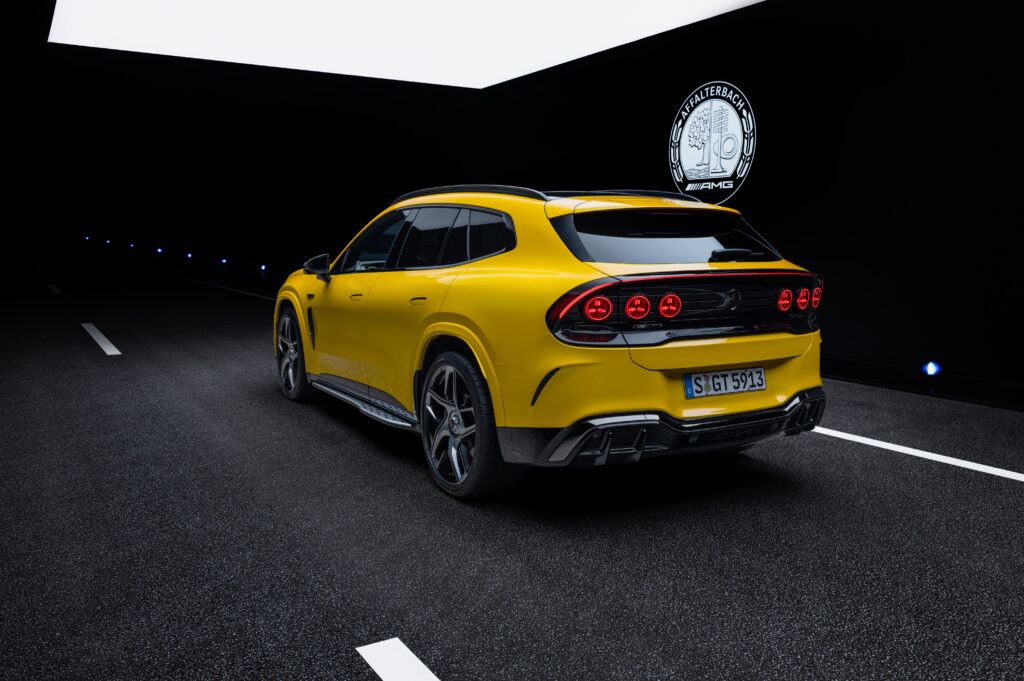
That lower seating position may sharpen the sporting feel, but it risks weakening one of the traditional attractions of the body style. For me, the point of the Mercedes-AMG GT SUV is not simply to outrun almost everything else from traffic lights, but to combine that ability with the comfort and usefulness of a proper luxury SUV.
I rather hope it succeeds, because the fast charging claims, sustained-power focus and bespoke engineering suggest AMG has done more than bolt enormous motors into an existing vehicle. If it can deliver genuine refinement, credible practicality and a more convincing identity than the BMW XM, this electric SUV could be much more than an exercise in excess.
latest Stories
 Read full story

Join Our Community
Stay up to date with our latest stories, fresh insights, and special updates. Subscribe to receive carefully selected content delivered straight to your inbox.