


Mercedes-AMG Releases Facelifted SUV Variants, and the V8 Survives the Cut

Callum Tokody
Author of the post
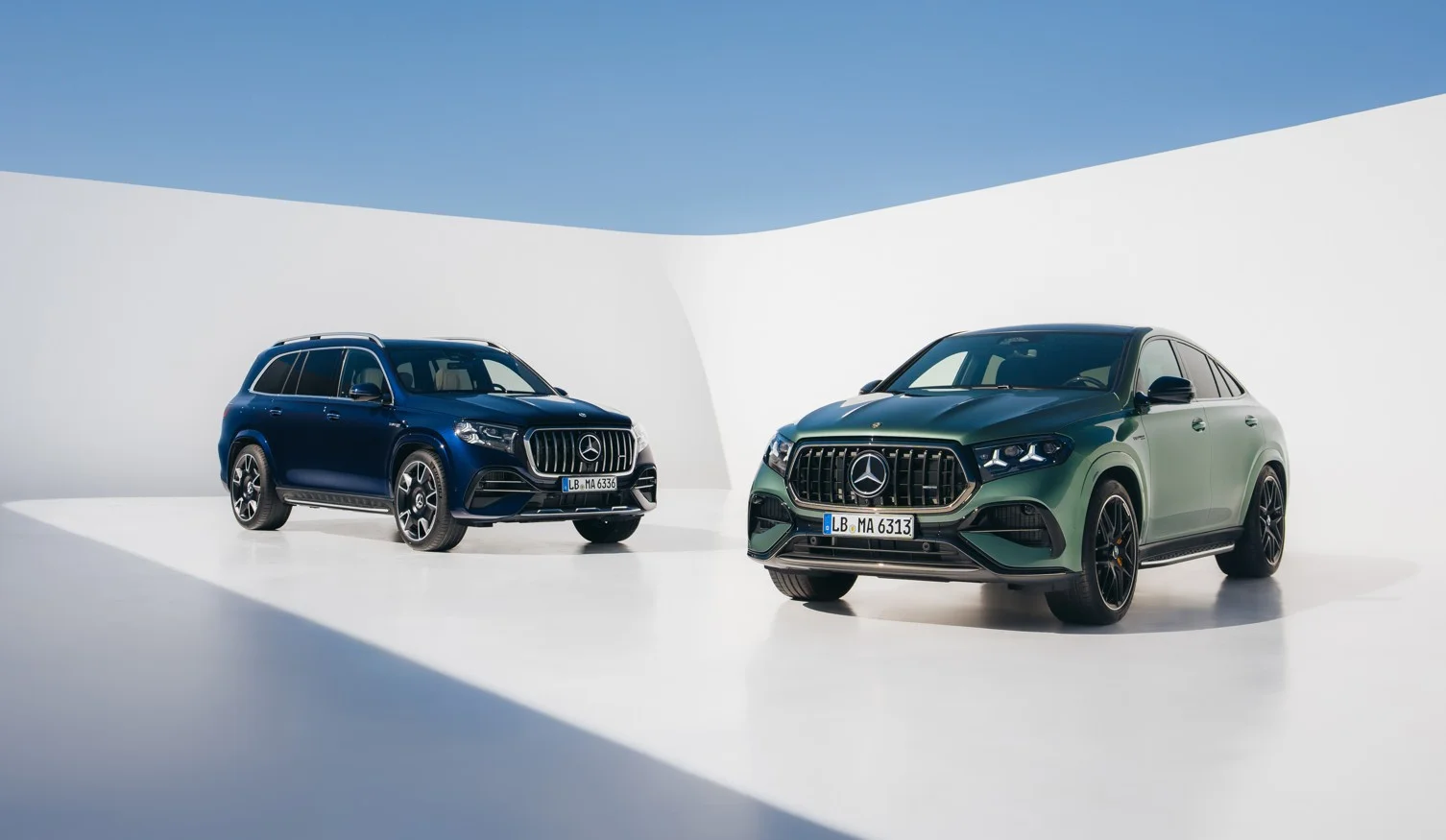
Mercedes-AMG has just released facelifted versions of its two biggest performance SUVs, the GLE 63 S and GLS 63, and the changes go well beyond the new front end. Underneath sits a V8 engine, the sort of thing regulators have been quietly trying to retire for a decade, rebuilt almost from the crank up rather than simply carried over. That alone makes this more than the usual mid-cycle refresh for a performance SUV. Mercedes-AMG has clearly used the facelift as cover for a much deeper mechanical overhaul. This is not a facelift dressed up as news. It is a genuine mechanical overhaul of the kind that performance SUV buyers have been quietly hoping for.
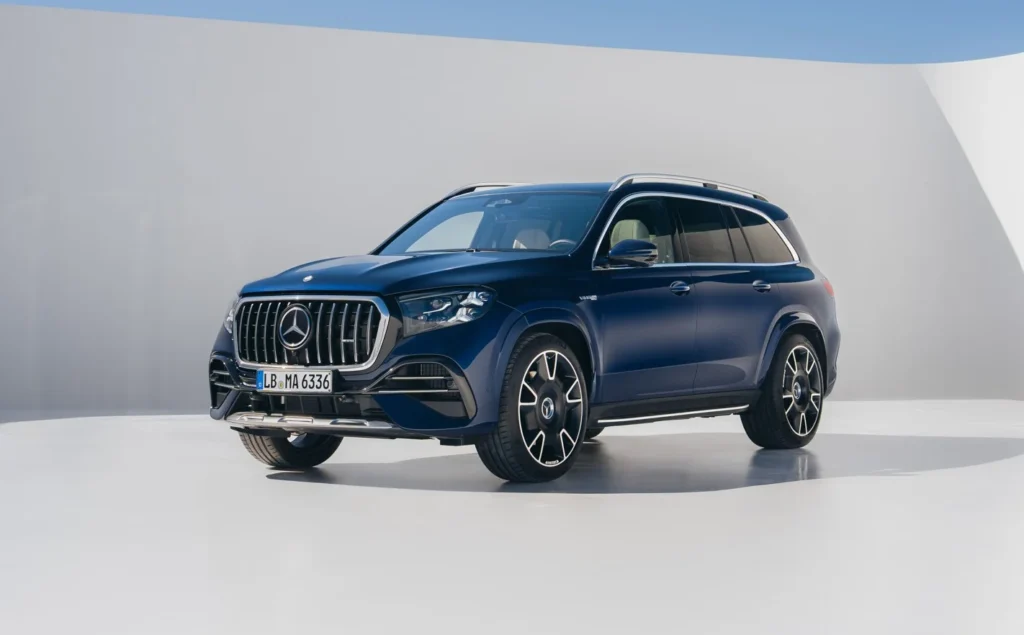
Why Mercedes-AMG Still Bothers With a V8
Big, fast SUVs are an easy target for criticism, and much of it is fair, especially when a luxury SUV starts chasing supercar numbers. But Mercedes-AMG has always argued its case differently, leaning on the theatre and mechanical honesty of a proper V8 engine rather than simply outgunning rivals on a spec sheet.
That argument gets harder to make every year, as emissions rules tighten and electrification creeps into every corner of the segment. The brand’s response with this update is not to retreat from the V8 but to re-engineer it, which is the more interesting story.
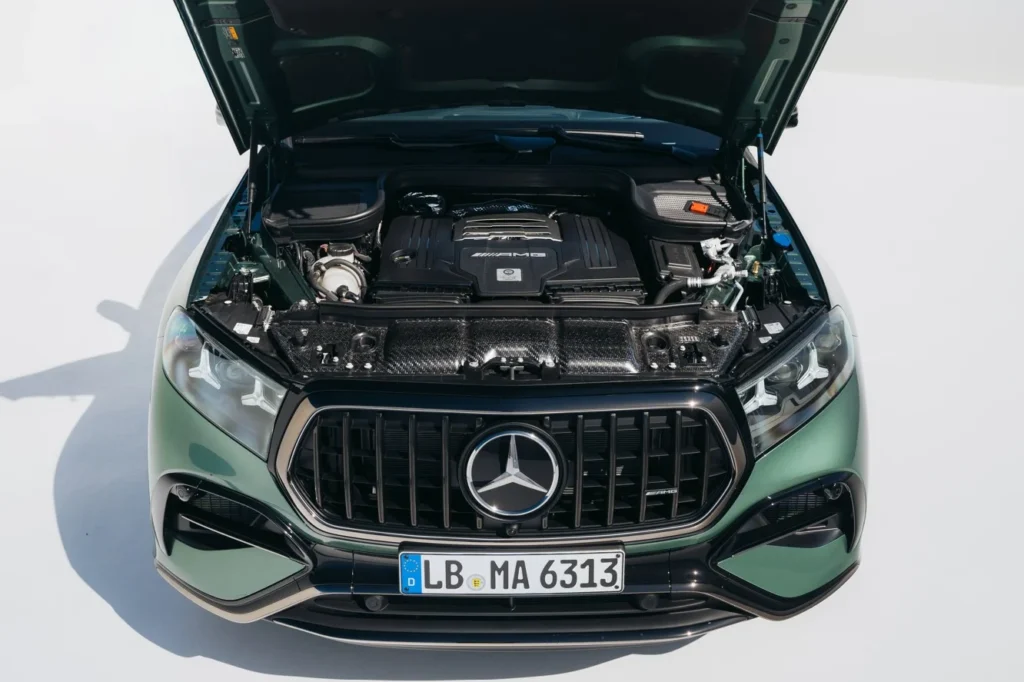
At the centre of both new models sits the AMG M177 EVO, a heavily revised version of the 4.0-litre biturbo V8 that has powered AMG’s biggest cars for years. The headline change is a flat-plane crankshaft, a piece of engineering more commonly associated with high-revving sports cars than the average luxury SUV.
Mercedes-AMG says the new crankshaft reduces rotating mass and sharpens throttle response, and the case for that is plausible given how much else has changed around it. Revised intake camshafts, a new injection system, redesigned ports and an updated turbocharger housing all point toward an engine built to rev more freely than before, not just to meet a regulation and move on.
Michael Schiebe, who sits on the Board of Management of Mercedes-Benz Group AG and chairs Mercedes-AMG’s own management board, framed the update as a long-term commitment to the V8 rather than a farewell tour. That is a bold claim in 2026, and one the market will ultimately judge rather than the press office.
A mild-hybrid system built around a 48-volt Integrated Starter Generator now sits alongside the V8, adding 17 kW and 205 Nm on top of the combustion engine’s own output. It is a sensible piece of engineering rather than a marketing flourish, smoothing throttle response at low revs and allowing the engine to restart without the usual diesel-era shudder.
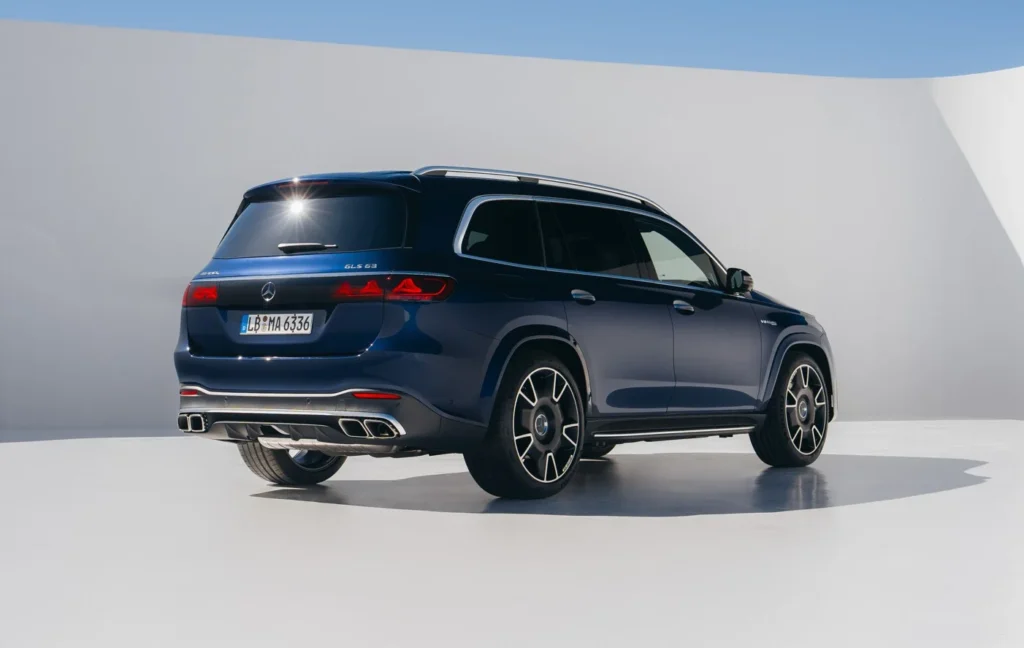
It also does the unglamorous work of keeping the M177 EVO compliant with emissions standards that would otherwise have forced the brand’s hand entirely. A standard particulate filter across every market confirms this is an engine designed to survive scrutiny, not just dodge it for another product cycle.
Total output lands at 450 kW, or 612 hp, with 850 Nm of torque spread across a genuinely wide band from 2,500 to 4,500 rpm. That is identical peak power to the outgoing car, which tells you the focus for this performance SUV was character rather than a bigger number on the box.
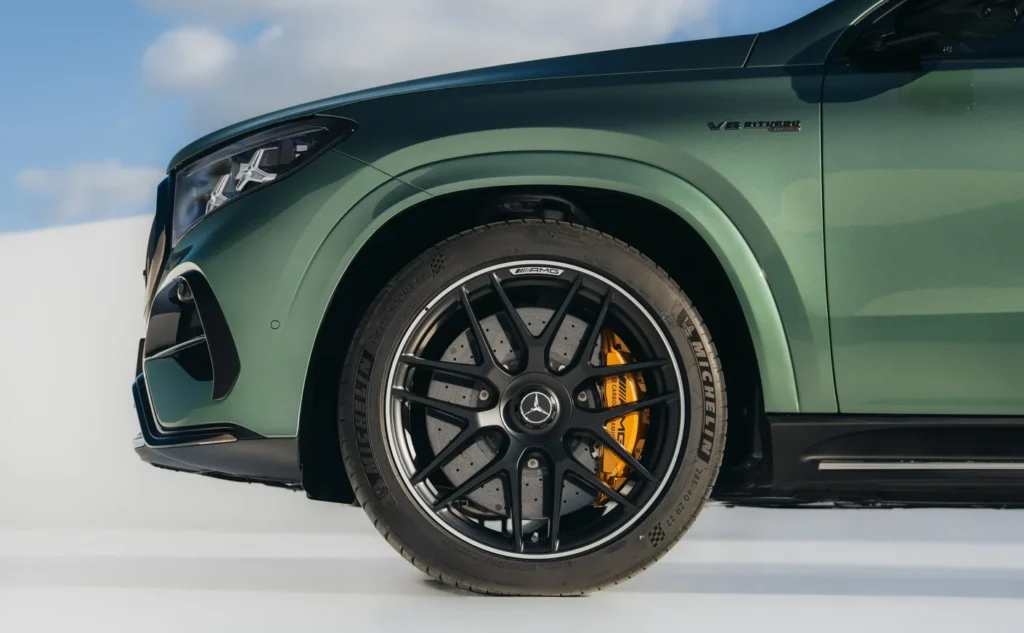
The GLE 63 S covers 0 to 100 km/h in 3.9 seconds, with the larger GLS 63 managing 4.2 seconds, both topping out at an electronically limited 280 km/h. Numbers like that have stopped being remarkable in this class, but they remain the entry fee for any serious performance SUV today.
What Mercedes-AMG has clearly worked harder on is how the car behaves once the number stops being interesting. AMG RIDE CONTROL+ air suspension now offers a wider spread between genuine comfort and proper firmness, with a Trail mode that raises ride height by 55 mm for rough surfaces.
Handling, Comfort and the Cabin Behind the Facelift
Standard AMG Active Ride Control adds active electromechanical stabilisers on both axles, scanning the road up to a thousand times a second to keep body roll in check. It is the kind of system that rarely gets noticed when it works, which is exactly the point of it.
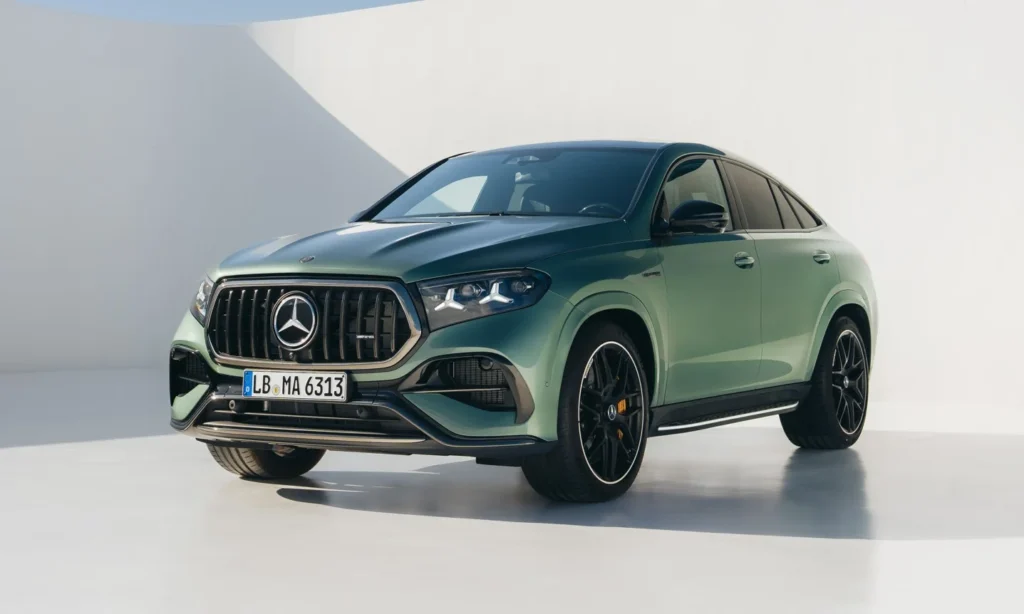
A new AMG Performance exhaust system gives the V8 engine a voice that can be tuned from restrained in Comfort mode to properly vocal in Sport+, a reminder that the V8 engine was never just a numbers exercise for this brand. It is a small detail on a spec sheet, but for a car built around the theatre of a V8, it is far from a minor one.
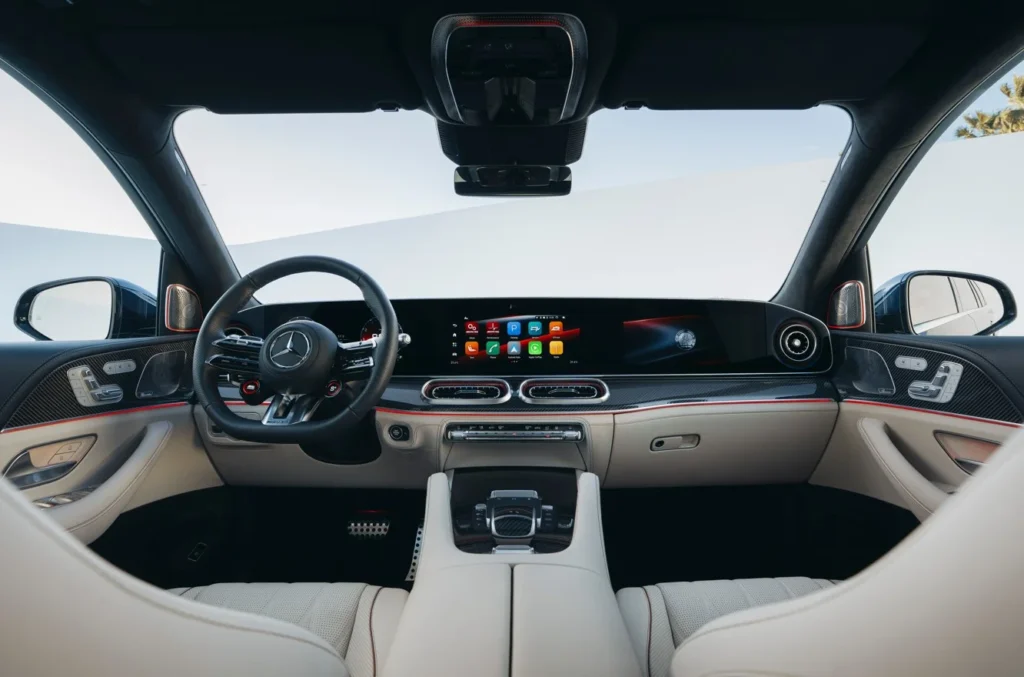
The cabin pushes further into digital territory with the new MB.OS operating system, displaying torque distribution, G-forces and engine parameters alongside the usual luxury SUV trimmings. Nappa leather, carbon trim and the optional MANUFAKTUR programme remain the obvious route to making one of these look genuinely bespoke rather than merely expensive, the kind of detail that separates a true luxury SUV from one merely wearing the badge.
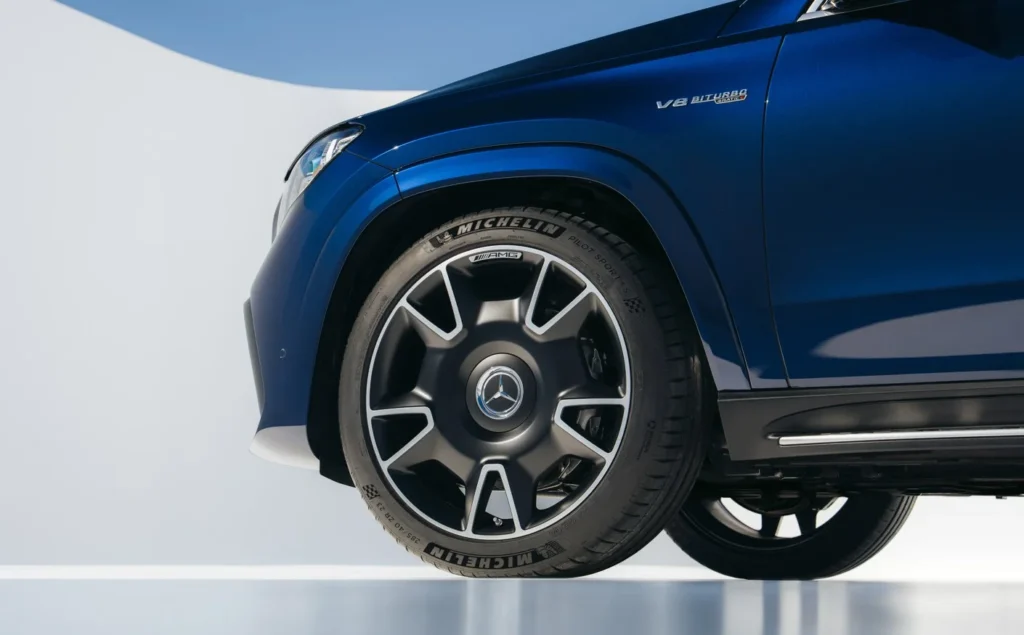
Against rivals like the Porsche Cayenne Turbo and BMW X5 M, the case for Mercedes-AMG has always rested less on outright numbers and more on character, and that has not changed here. What has changed is the confidence behind the engineering, with the brand treating its V8 as something worth investing in rather than managing toward retirement.
Whether that confidence is well placed depends on how the market responds over the next few years, as the luxury SUV segment edges further toward electrification regardless of what enthusiasts want. For now, Mercedes-AMG and its two reworked SUVs make a genuinely persuasive argument that the V8 engine, far from being phased out, still has somewhere useful left to go.
latest Stories
 Read full story

Join Our Community
Stay up to date with our latest stories, fresh insights, and special updates. Subscribe to receive carefully selected content delivered straight to your inbox.