


Manic Guide on buying the right Bentley Continental and why 8 might be greater than 12

Callum Tokody
Author of the post

The advertisements are becoming dangerously persuasive. A low-mileage Continental GT or Bentley Flying Spur can now cost little more than a new executive hatchback, placing 12 cylinders, hand-stitched leather and an alarming quantity of wood within reach of people who still compare insurance quotes. Yet a used Bentley does not become affordable simply because depreciation has removed a zero from the asking price, and the W12 can turn apparent value into an exquisitely upholstered financial incident. This Bentley Continental buyer’s guide explains why the later Bentley V8 is usually the wiser target, what inactivity does to a complex luxury car and how to identify an example that has been maintained rather than merely preserved.
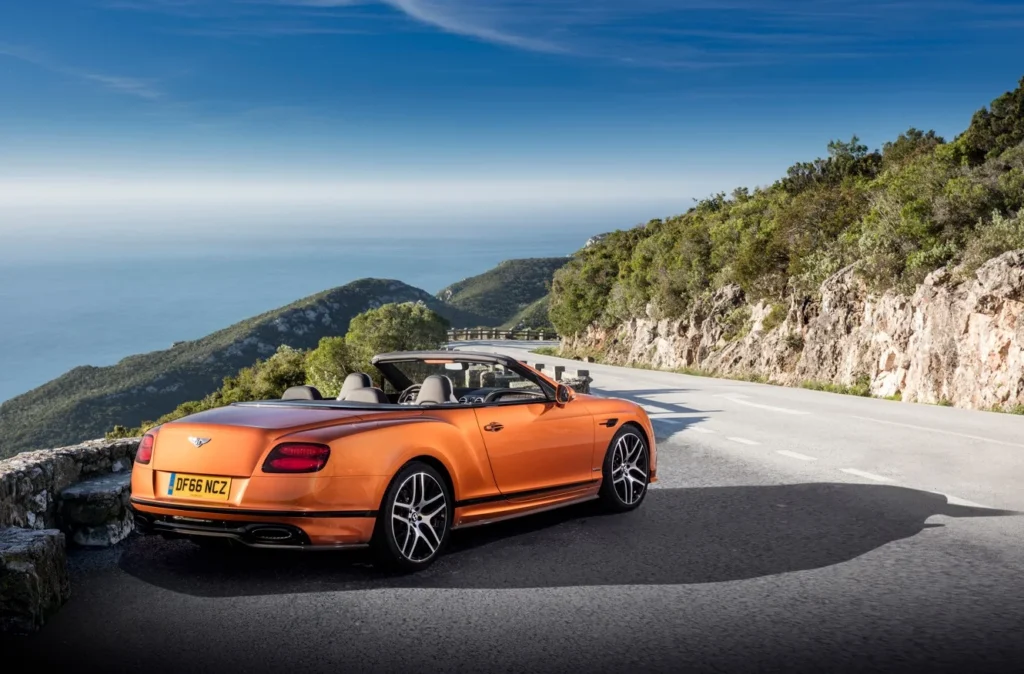
Bentley Continental buyer’s guide: Do not worship low mileage
The first-generation Continental GT arrived in 2003 and shared its underlying architecture with the Volkswagen Phaeton. That fact is sometimes used to dismiss it as a Volkswagen wearing a dinner jacket, usually by people who have never tried pricing a Bentley headlamp. The platform connection is real, but the finished car is still immensely complicated, very heavy and extremely powerful. It was expensive to build, expensive to service and entirely unaware that somebody would eventually buy it for the price of a used Toyota. That is the central warning of any honest Bentley Continental buyer’s guide: depreciation changes the purchase price, not the engineering beneath it.
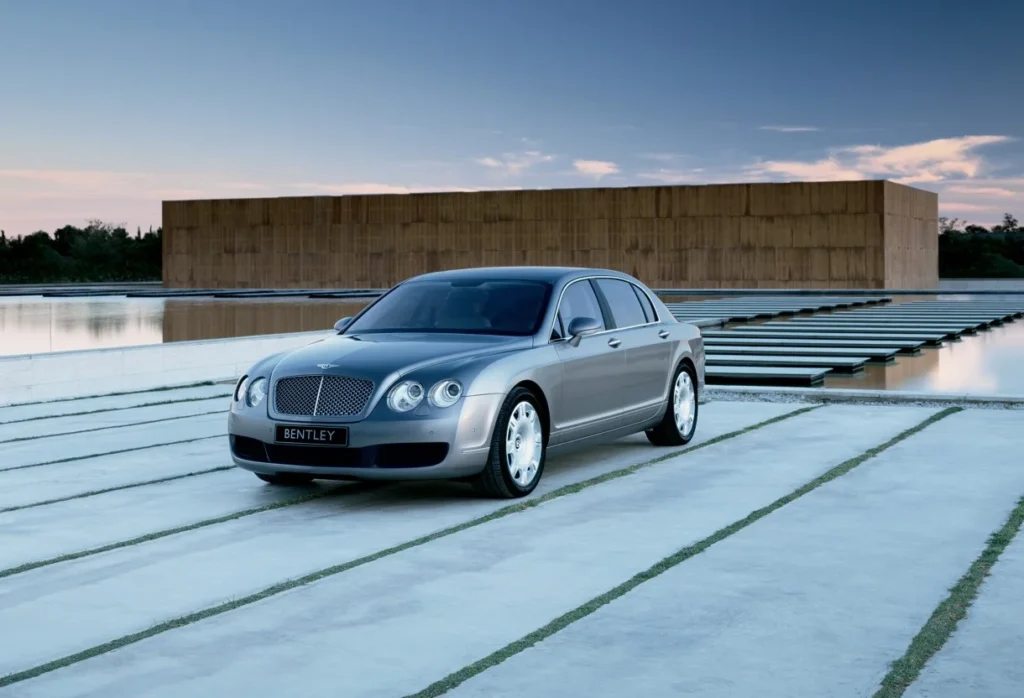
The same caution applies to the related Bentley Flying Spur. Early examples are appearing with tiny odometer readings and interiors that still smell as though nobody was permitted to exhale inside them. That does not automatically make them good cars, and a Bentley Flying Spur deserves the same scrutiny as the coupé. A Bentley Flying Spur showing 10,000km after nearly two decades has spent most of its life standing still, which is not the gentle retirement many advertisements imply. Cars deteriorate while parked, with batteries discharging, seals drying, rubber hardening, fluids absorbing moisture and tyres ageing long before their tread disappears.
Plastic cooling components and vacuum lines also become brittle with time and heat. A used Bentley may have barely moved, but its hoses, clips, connectors and seals have still reached their eighteenth birthday. Age is not cancelled by a flattering odometer, whether the car is a Continental GT or a Bentley Flying Spur. A very low-mileage used Bentley therefore needs a history that explains how it was stored and maintained. Annual servicing matters even when the mileage barely changes, as does evidence that the car was warmed properly, driven regularly and not left beneath a cover while every consumable quietly aged around it.
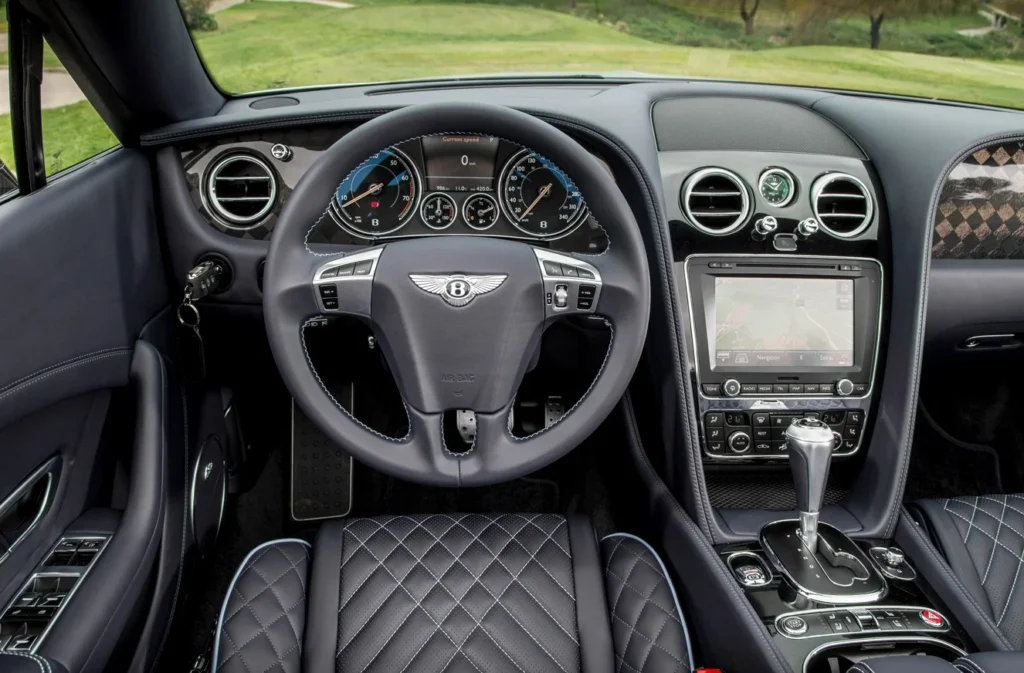
There is no magical threshold at which mileage becomes suspicious, and 12,000km should not be treated as a legal boundary. It is simply a reason to ask more questions, particularly when the history is thin and the seller seems more interested in the odometer than the invoices. An 80,000km used Bentley with yearly receipts may be a far safer purchase than a 12,000km example last serviced when people still bought satellite-navigation discs. With machinery this complex, use can be healthy and neglect can look immaculate. The best Bentley Continental buyer’s guide advice is often the least glamorous: condition and documentation matter more than a small number on the dashboard.
Then there is the W12. The 6.0-litre twin-turbocharged engine is central to the Continental’s character, giving it the effortless, slightly surreal acceleration that made the original car so extraordinary. It is also packed very tightly into the nose. Major engine work can require removal of the powertrain, and even relatively uncommon failures can produce enormous bills because of the labour required to reach anything. This is where the cheapest W12 begins to reveal its sense of humour, which is usually drier than the owner’s bank account.
Turbocharger problems are especially intimidating. The W12 uses two turbochargers buried in an engine bay with little spare room, so blue exhaust smoke, poor boost or rising oil consumption must be taken seriously rather than explained away as 12-cylinder character. The turbos are not guaranteed to fail, and correctly serviced engines can cover substantial distances without trouble. The concern is what happens when they do fail, because access turns a component problem into a labour problem and the invoice begins behaving like a house deposit. Any Bentley Continental buyer’s guide that treats this as a footnote is being unhelpfully polite.

Cooling systems deserve equal attention in any Bentley Continental buyer’s guide. Inspect the radiator, hoses, expansion tank and surrounding pipework for staining, leaks or the sweet smell of coolant, then make sure the car reaches and holds its operating temperature without drama. Oil leaks are common enough to justify a careful inspection beneath the engine and transmission. A slight mist may be manageable, but an undertray freshly cleaned before sale should inspire curiosity rather than gratitude. Cleanliness is not always innocence.
A complete service history is essential. The W12 carries a large oil capacity, multiple filters, 12 spark plugs, two turbochargers and enough tightly packaged hardware to make deferred maintenance a form of compound interest. Ask for invoices, not merely stamps. You need to know whether the used Bentley received the correct oil, whether age-based maintenance was completed and whether warning lights were diagnosed rather than extinguished shortly before the photographs were taken.
Start the engine from cold. It should fire promptly, idle cleanly and produce no persistent smoke, tapping or irregular misfire. A seller who has already warmed the car may simply be considerate, although they may also be hiding the exact 10 seconds you travelled across town to hear. The automatic transmission should engage drive and reverse without delay or a pronounced thump. During the test drive, it should shift smoothly under light throttle and respond cleanly when the W12 is asked to deliver the performance promised by the badge.

Do not accept hesitation, flare or shudder as a normal feature of a large luxury car. Bentley did not charge six figures for the experience of waiting to see which gear arrived. A proper Bentley Continental buyer’s guide should be blunt about this: smoothness is part of the car’s job description. Air suspension is another major inspection point on both the Continental and Bentley Flying Spur. These are exceptionally heavy cars, and ageing air springs, dampers and compressors are familiar sources of trouble. Check the vehicle after it has been parked overnight and look for one corner sitting lower than the others.
Cycle the suspension through its settings, listen for an overworked compressor and make sure the car rises evenly. A Bentley Flying Spur that leans after a night’s rest is not displaying character. It is submitting an estimate. Brakes and tyres are similarly expensive because the cars are fast, powerful and roughly the weight of a respectable moon. Inspect the discs for lips, scoring or cracking, and verify that all four tyres are appropriate premium items with even wear. A bargain used Bentley wearing four unrelated budget tyres is already telling you how its previous owner approached expenditure. Listen carefully, because the tyres may be the most honest part of the advertisement.
The Bentley V8 is the one I would actually buy
The second-generation Continental GT introduced the 4.0-litre twin-turbocharged Bentley V8 in 2012. It used the Volkswagen Group’s hot-side-inside layout, placing its turbochargers within the vee of the engine, and initially produced 500bhp and 660Nm through an eight-speed automatic transmission. This is the version I would recommend to most buyers. The Bentley V8 still provides proper Bentley performance, makes a better noise than many expected and loses little of the effortless speed that defines the car. It also presents a more manageable mechanical proposition.
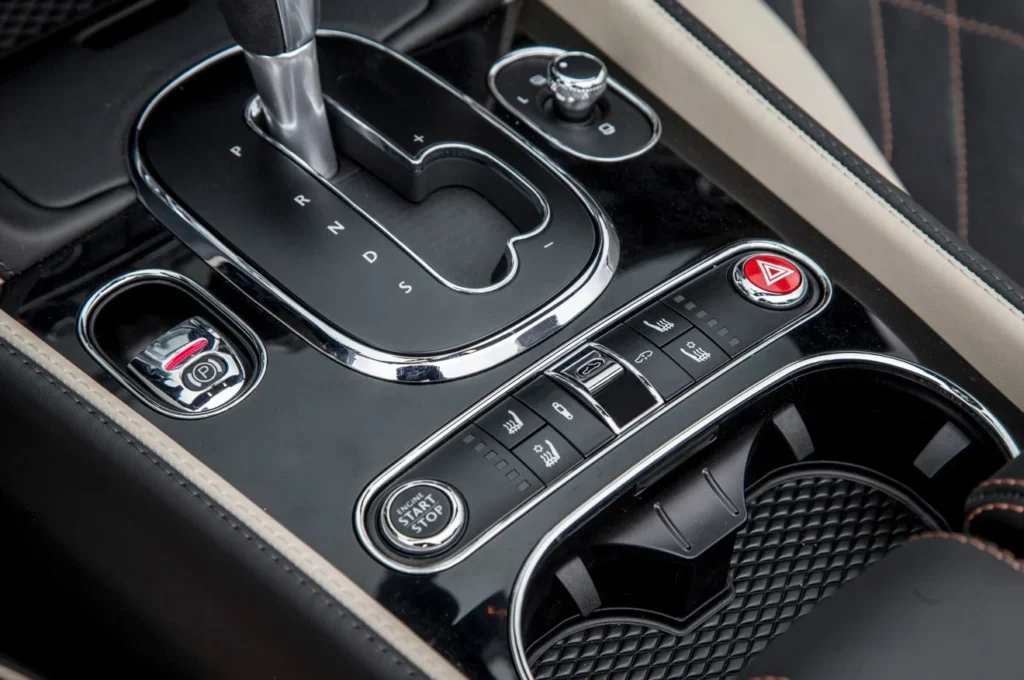
The Bentley V8 is related to the 4.0-litre engine used across high-performance Audi and other Volkswagen Group models. That wider application gives independent workshops greater familiarity with the powertrain and supports a broader ecosystem of knowledge and parts than exists around the more unusual W12. Its hot-vee configuration also makes the turbochargers less inaccessible than those surrounding the 12-cylinder engine. That does not make turbo replacement cheap or pleasant, but it can avoid the same scale of disassembly associated with major W12 work. For a used Bentley buyer, that distinction matters.
There is an important warning attached. Early versions of the Volkswagen Group 4.0 TFSI developed a reputation in some applications for restricted turbocharger oil strainers, which could reduce oil supply and damage the turbos. That history means the Bentley V8 still needs inspection by somebody who knows the engine. Ask whether relevant oil-supply updates have been completed, check for smoke or unusual turbo noise and insist on evidence of disciplined oil changes.
More reliable is a relative term here. It means the Bentley V8 is generally a more manageable proposition than the W12, not that it should be treated like a Camry with quilted leather. This Bentley Continental buyer’s guide recommends it because the risks are more intelligible, not because they disappear. The lighter nose also makes the Continental feel more willing to change direction. Bentley initially claimed only a modest weight reduction, but the engine’s character and eight-speed gearbox gave the car a sharper, more responsive personality without undermining its grand-touring ability.
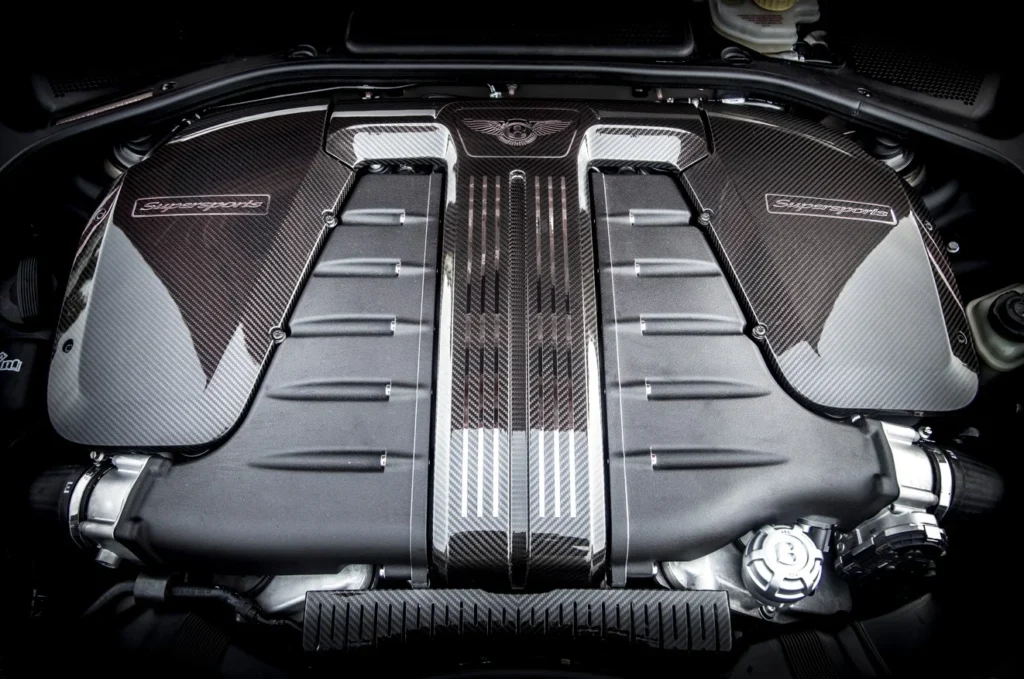
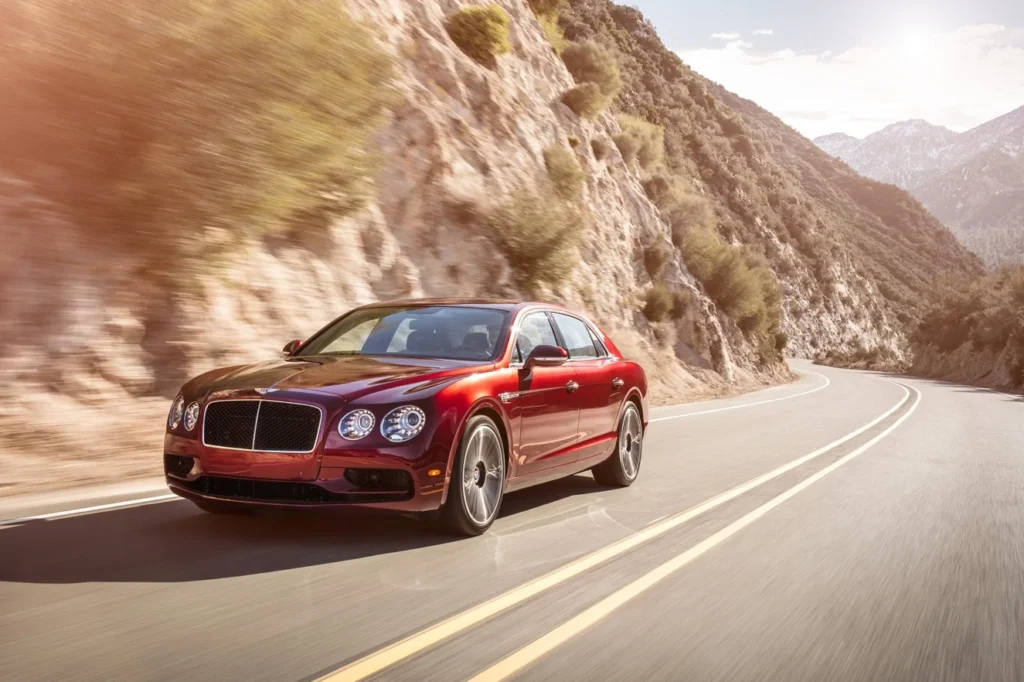
The Bentley V8 S is particularly appealing, and it strengthens the case for the Bentley V8 as the sensible enthusiast’s choice. Output rose to 521bhp and 680Nm, accompanied by a slightly more assertive chassis and enough exhaust noise to make the smaller engine feel like a deliberate choice rather than the discounted one. A Bentley Flying Spur with the V8 or V8 S makes similar sense. It retains the remarkable cabin, four-door usefulness and faintly intimidating scale of the W12 car, while removing four cylinders and at least some of the potential for mechanical theatre.
Regardless of engine, inspect the rest of the car with the seriousness of somebody purchasing a complex building. The Bentley Continental buyer’s guide principle remains simple: every luxury feature is also another item capable of failing. Test every window, seat motor, massage function, heater, climate-control zone, parking sensor, camera and piece of infotainment equipment. Early cars can suffer electrical issues involving wiring, batteries and control modules. Two batteries are used in many models, and low voltage can trigger a collection of warning messages that appear unrelated until a specialist explains that the car is simply tired.
Check the powered boot, keyless entry, electric steering column and soft-close doors. One failed convenience feature may be tolerable, but several together suggest the used Bentley has entered the stage of life where its owner only repairs equipment required for the annual inspection. The interior of a used Bentley should wear its mileage convincingly. Bentley leather is robust, so heavily collapsed seat bolsters, a polished steering wheel and scratched switchgear on a supposedly tiny-mileage car require an explanation.
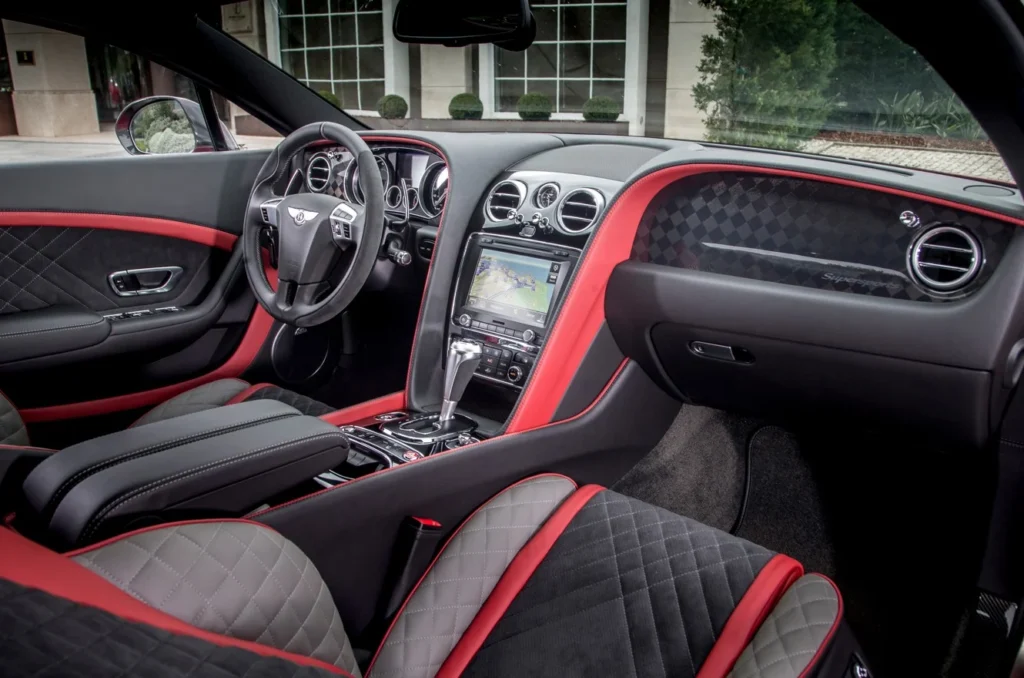
Wood veneer can crack, headlinings can sag and adhesive-backed trim may begin surrendering to age and heat. None of this necessarily makes the car unusable, but repairing handmade cabin materials is rarely priced according to the vehicle’s current market value. The Continental GTC adds another layer of checks. Operate the roof several times, inspect the fabric and seals, look for water staining and check the hydraulic system for leakage.
A convertible used Bentley with a non-functioning roof is not a coupé at a discount. It is a large, leather-lined container for a very expensive repair. Even the most optimistic Bentley Continental buyer’s guide cannot make that charming. The test drive should last long enough for the car to reach full temperature. Drive it slowly through town, accelerate firmly, use the brakes properly and find an uneven road where suspension noises cannot hide beneath the stereo. A healthy Continental should feel remarkably solid. It may be heavy, but it should not clunk, shimmy, wander or behave as though its various control systems were introduced at the dealership that morning.
Arrange a pre-purchase inspection with a genuine Bentley or Volkswagen Group specialist. A normal workshop may recognise the familiar Audi-derived components, but familiarity with the complete car matters because diagnosis can involve complex networks, specialised software and access procedures that punish improvisation. A professional inspection of a used Bentley should include a full diagnostic scan, cooling-system pressure test, suspension assessment and review of the service history. Ask for estimates against every fault so the attractive asking price can be considered alongside the actual cost of making the car right.
Keep a serious repair fund after purchase. The exact amount depends on the model and condition, but the buyer who spends their final dollar acquiring a used Bentley has already misunderstood the transaction. Cheap tyres, skipped services and warning lights taped over by optimism do not become less expensive because the car was bought below market value. A £150,000 or $300,000 car depreciates, but its component count does not. That remains true whether the badge reads Continental or Bentley Flying Spur.
The W12 remains the emotionally compelling version, especially in a Bentley Flying Spur where its effortless torque suits the car’s scale. Even so, a Bentley Flying Spur with the smaller engine is the less alarming ownership prospect. The W12 is magnificent when healthy, smooth beyond reason and representative of an era unlikely to return. For an enthusiast prepared to accept five-figure surprises, a properly maintained W12 with regular use and exhaustive history can make sense. The mistake is assuming low mileage, a clean interior and an inviting price have somehow cancelled the engineering. No Bentley Continental buyer’s guide can protect a buyer who prefers an odometer reading to a service file.
For everyone else, buy the Bentley V8. The Bentley V8 is not inexpensive motoring, but it is the version least likely to turn every unfamiliar sound into a financial forecast. Find a regularly driven Continental GT, GTC or Bentley Flying Spur with annual servicing, documented maintenance and no unanswered faults. It will still be expensive, and it will occasionally behave like a private aircraft that has developed a warning light. The Bentley V8 simply gives you most of the speed, all of the atmosphere and a more believable chance of enjoying the car without mentally calculating its resale value every time the engine makes a new sound.
That is the conclusion of this Bentley Continental buyer’s guide, and it is also the point every Bentley Continental buyer’s guide eventually reaches. The cheapest W12 is seductive because it allows an ordinary budget to enter an extraordinary world, but the right used Bentley is not the one with the fewest kilometres or the grandest specification. It is the one that has been used, serviced and repaired by someone rich enough to own it properly before it became your turn. That may be a Continental, a GTC or a Bentley Flying Spur, but the Bentley V8 remains the version most likely to let the fantasy survive contact with the invoices.
latest Stories

 Read full story


Join Our Community
Stay up to date with our latest stories, fresh insights, and special updates. Subscribe to receive carefully selected content delivered straight to your inbox.