


2027 Porsche 718 Boxster and Cayman finally revealed? New images show what Porsche has been hiding

Callum Tokody
Author of the post
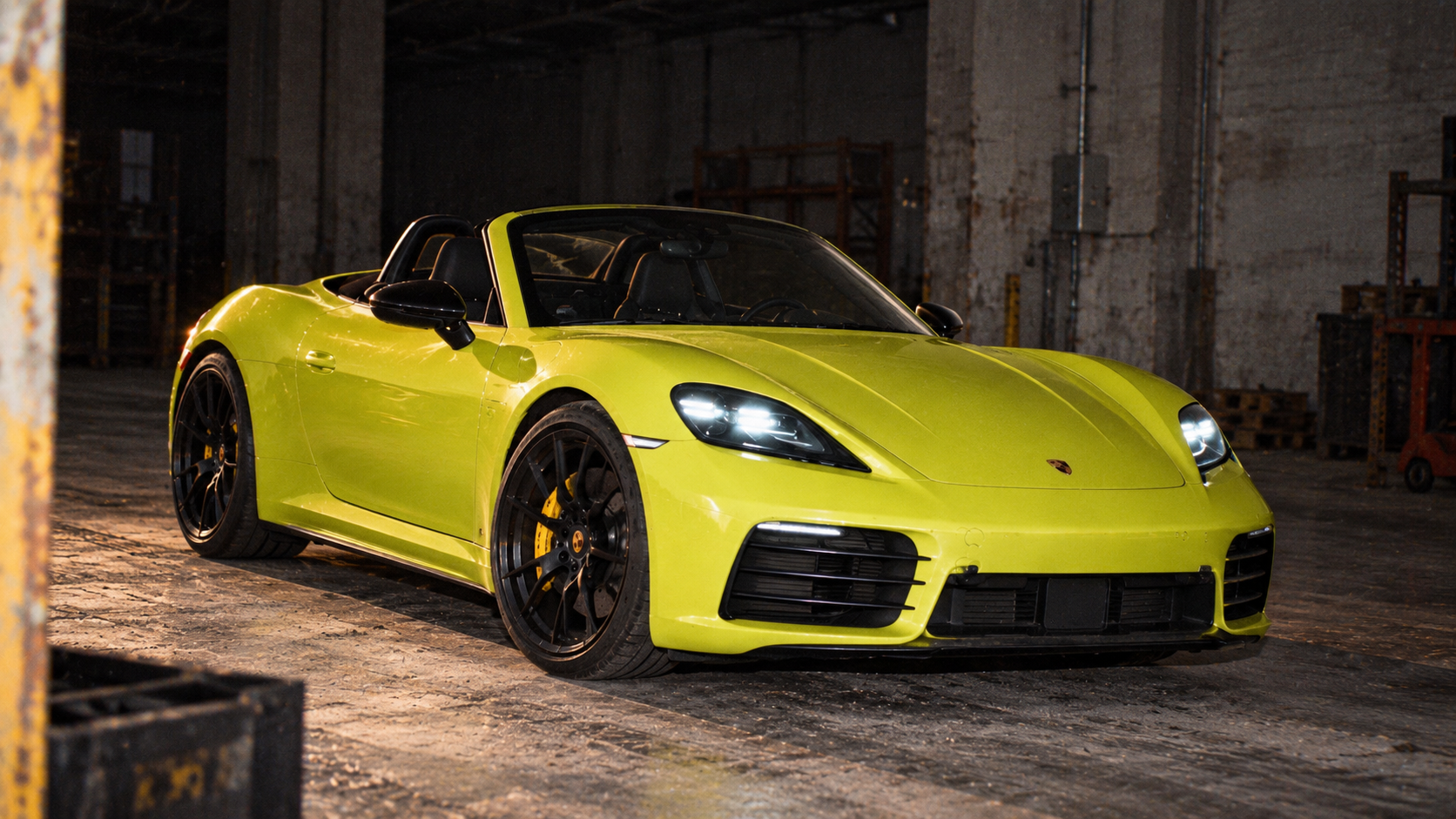
Porsche has spent years concealing its next-generation 718 Boxster and Cayman beneath increasingly elaborate camouflage, but the outlines are now difficult to miss. The forthcoming electric sports cars appear to retain the low-slung proportions, compact cabins and muscular rear haunches that have made the current pair such enduring alternatives to the 911.
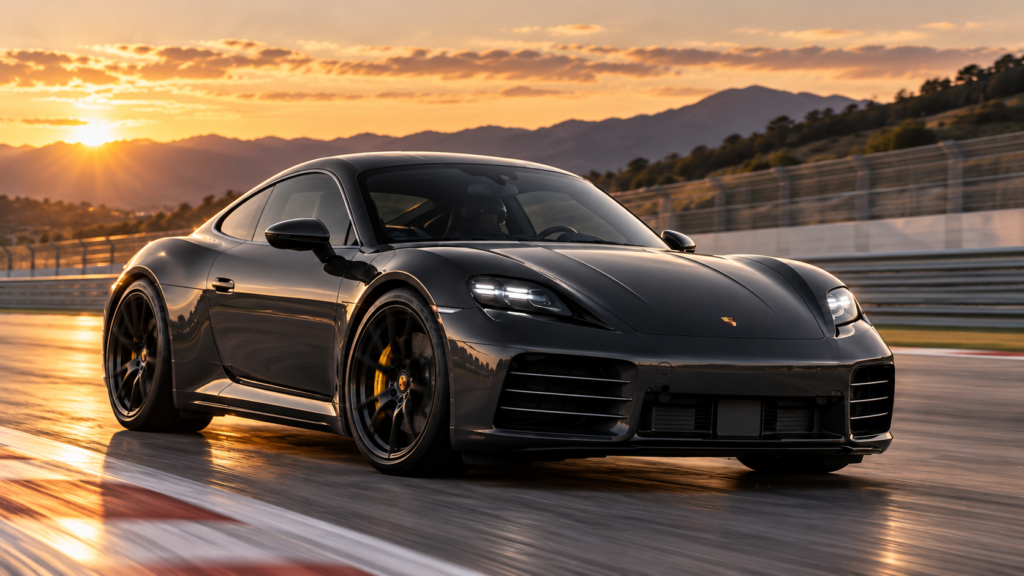
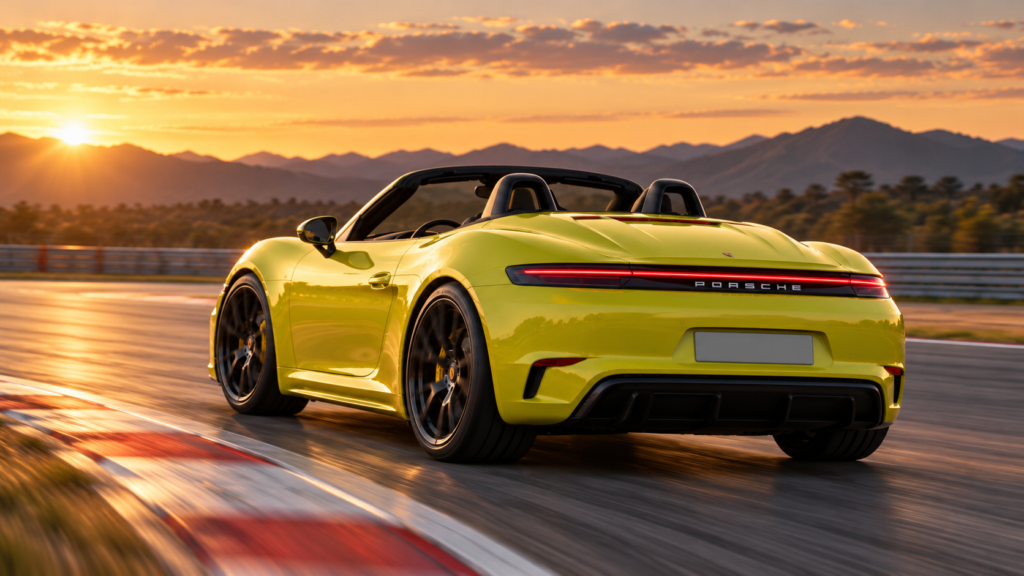
These renders are speculative rather than official Porsche images, but they draw on the latest development prototypes. If they are close to the production cars, Porsche’s electric Boxster and Cayman will look reassuringly familiar, albeit with a cleaner and more technical interpretation of the marque’s current design language.
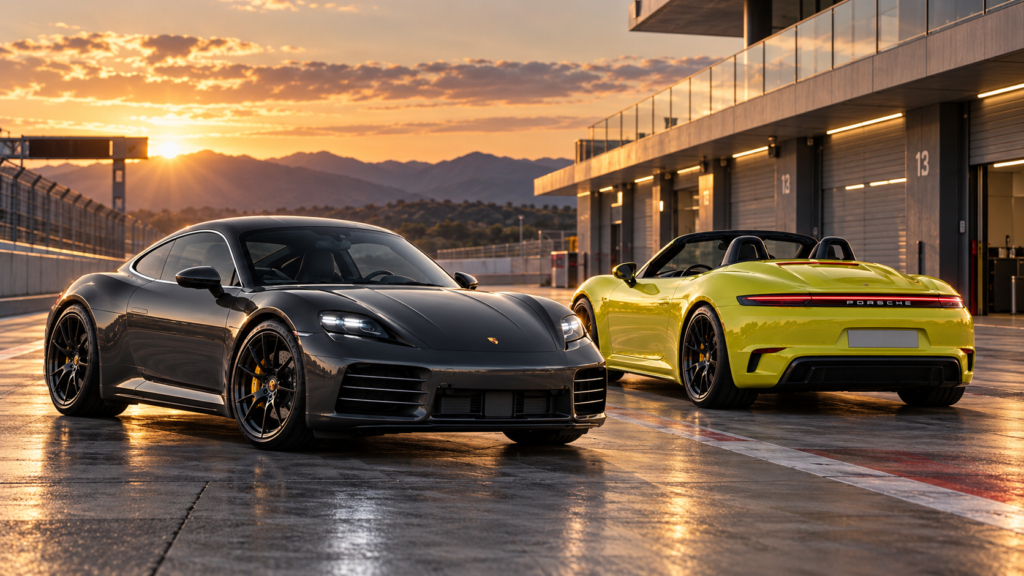
Porsche has confirmed that electric versions of the 718 remain part of its product strategy. On 7 October 2026, the company said it expected the cars’ first full year of production to fall in 2028, with an introduction anticipated during 2027. A precise reveal date, final specifications and pricing have not yet been announced.
A familiar Porsche sports-car shape, cleaned up for electric power
The Boxster appears set to retain its traditional fabric roof, short overhangs and low bonnet, while the Cayman keeps the compact fixed-roof silhouette that has long given it a particularly tidy stance. Neither seems to be chasing a radical visual reset. Porsche’s approach appears to be evolution, with enough new detail to signal that something fundamental has changed beneath the bodywork.
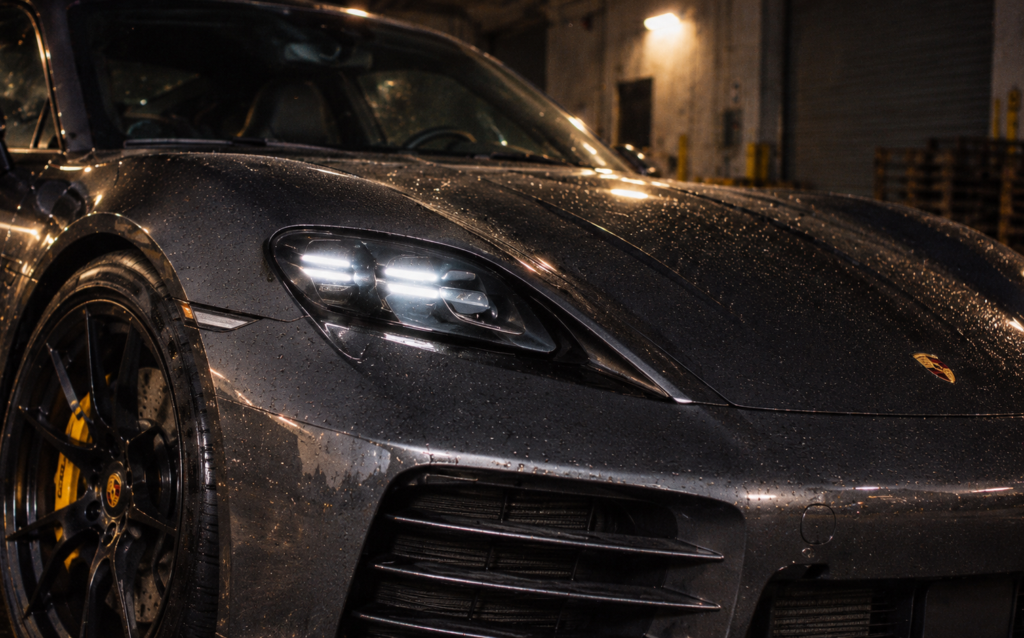
The most obvious shift is likely to be at the front. Prototype details suggest slimmer headlights with Porsche’s four-point lighting signature, plus larger lower openings that could serve cooling and aerodynamic functions. The final arrangement remains unclear, as development cars have worn false panels and temporary lighting units, particularly around the rear.
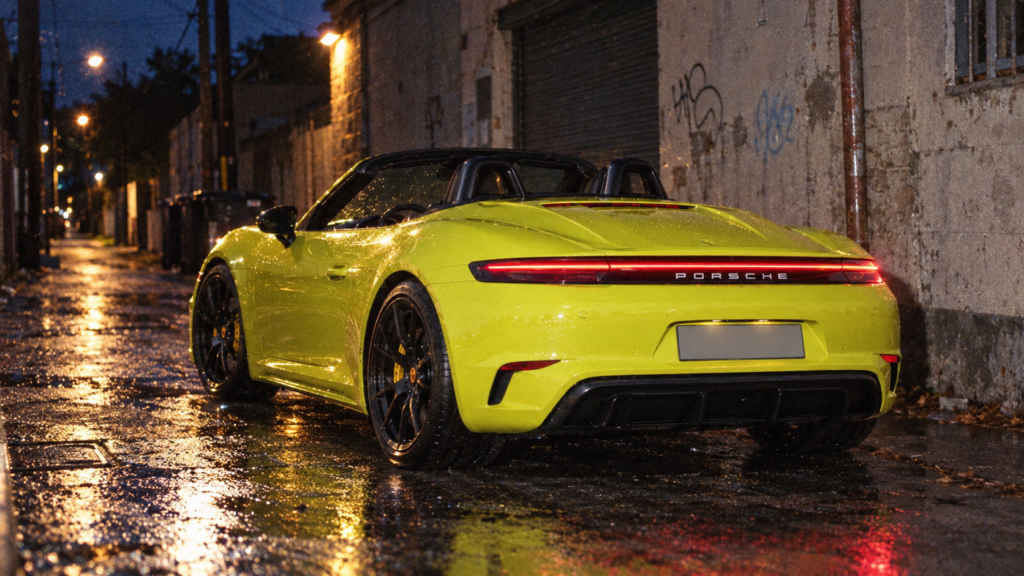
Along the flanks, the familiar side intakes of the combustion-powered 718 look likely to disappear. An electric powertrain does not need the same continuous supply of cooling air for a mid-mounted engine, allowing Porsche to smooth the body sides and simplify the profile. It is a small visual change, though one that could make the new cars look notably less busy than their petrol predecessors.
The rear may adopt a slimmer lighting treatment, potentially including a full-width light bar in keeping with other modern Porsches. That remains an informed reading of disguised prototypes rather than a confirmed production detail. The broad message is clearer: Porsche appears determined to preserve the Boxster and Cayman silhouettes rather than turn its smallest sports cars into generic electric coupes.
The battery is intended to preserve the mid-engined feel
The larger challenge is not the styling. It is how an electric Porsche 718 can retain the balance and seating position that have defined the Boxster and Cayman for decades.
Porsche’s answer is an architecture it calls E-Core, which places the battery behind the occupants, broadly where the combustion engine would sit in the current cars. Most electric vehicles carry a large battery pack beneath the cabin floor. Porsche’s arrangement is intended to preserve a low driving position, familiar sports-car proportions and a weight distribution closer to that of a mid-engined car.
Porsche has disclosed that an electric 718 prototype carried around 55.2 per cent of its weight over the rear axle, compared with roughly 59.8 per cent for the outgoing combustion-powered Boxster. That does not guarantee a particular handling outcome, since suspension tuning, steering, tyre choice and mass all matter enormously. It does, however, show that Porsche is treating battery placement as a dynamic issue rather than merely a packaging exercise.
Final power outputs, battery capacity, range, acceleration figures and top speed remain unconfirmed. Porsche has demonstrated rear-wheel-drive capability in development, while dual-motor all-wheel-drive variants have also been widely discussed. Until Porsche publishes the production line-up, neither should be treated as settled fact.
What is established is an 800-volt electrical architecture, which should support rapid charging and help manage the thermal demands of repeated hard use. Porsche has also been experimenting with E-Shift, a system that uses steering-wheel paddles to simulate gearchanges by altering electric power delivery. It may also be paired with synthesised sound.
Purists will understandably question whether an electric sports car needs artificial shifts when an electric motor can provide uninterrupted acceleration. Yet the experiment reveals something useful about Porsche’s thinking. The firm is not simply pursuing performance figures. It is examining how an electric 718 might still offer involvement, rhythm and a sense of mechanical participation.
There is no confirmed next-generation petrol 718 at present. Porsche has previously discussed high-performance combustion possibilities, but petrol Boxster and Cayman successors were absent from its October 2026 product roadmap. For now, the electric 718 is the future Porsche is publicly preparing.
That leaves an awkwardly high bar. The outgoing cars have never relied solely on outright power, instead earning their reputation through balance, precision and a sense that every major control has been considered properly. The camouflage will eventually come off, but the real test will be whether Porsche has kept those qualities intact while replacing the flat-four and flat-six soundtrack with batteries, motors and software.
latest Stories
 Read full story

Join Our Community
Stay up to date with our latest stories, fresh insights, and special updates. Subscribe to receive carefully selected content delivered straight to your inbox.