


Audi flew us to Morocco to push the new Audi RS5 performance to the absolute limit

Callum Tokody
Author of the post
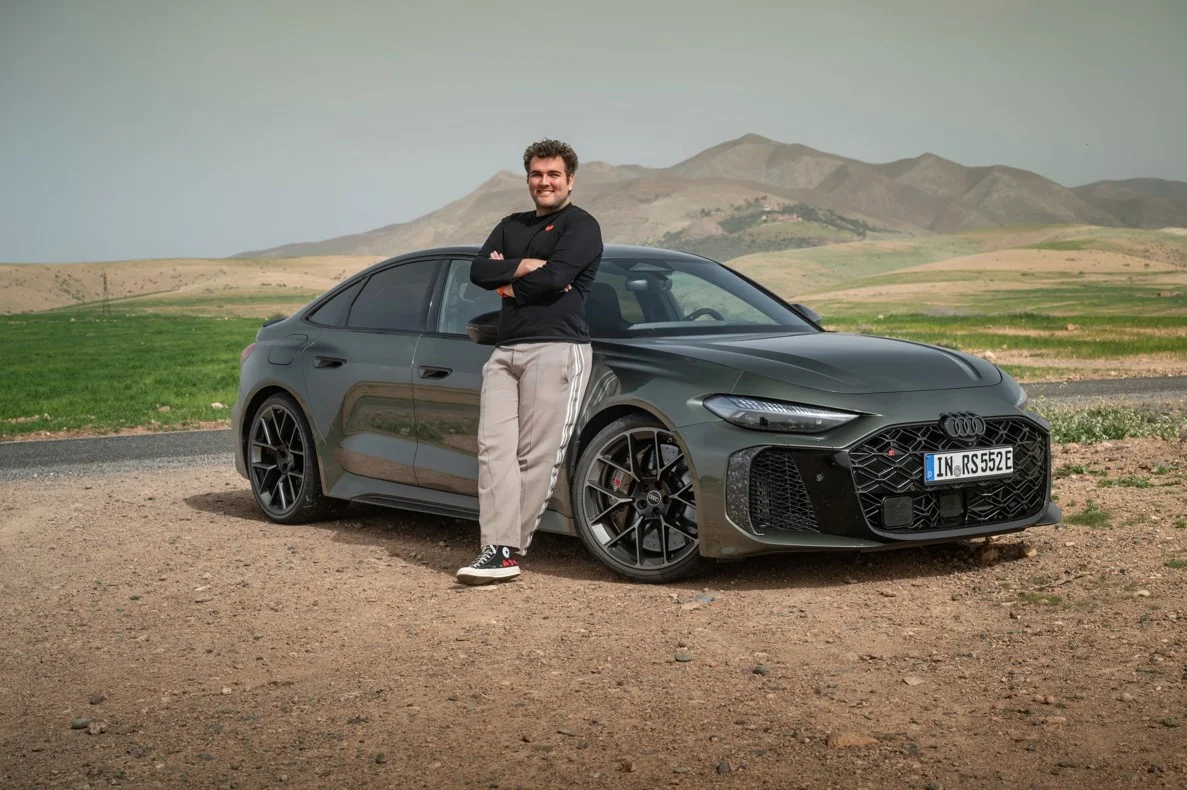
It is a brave thing to fly a pack of cynical journalists to North Africa just to prove that the new Audi RS5 performance is at the absolute limit. This technical marvel manages to pack a punch with its 630hp output while retaining the soul of a 2.9-litre twin-turbo V6 under the hood. To ensure that 2,355kg of German engineering actually dances, Audi has deployed a clever electrified dynamic torque vectoring system that aims to defy the laws of physics. Whether this complex flagship can truly justify its weight on a sun baked mountain pass is the question that kept me awake on the flight over.
The heavyweight punch and visual drama of the new Audi RS5
When you first see the Audi RS5 in the Moroccan sun, it becomes immediately apparent that the design team has been spending a lot of time in the gym. It is 90mm wider than the standard A5, giving it a stance that suggests it might actually eat a BMW M3 for breakfast. The flared wheel arches are a proper throwback to the original Quattro, while the planet-sized exhaust exits at the rear are mercifully real rather than the plastic fakery we see too often lately. It is a handsome, aggressive thing that manages to look expensive without looking like it was designed by a teenager with a penchant for wings and splitters.
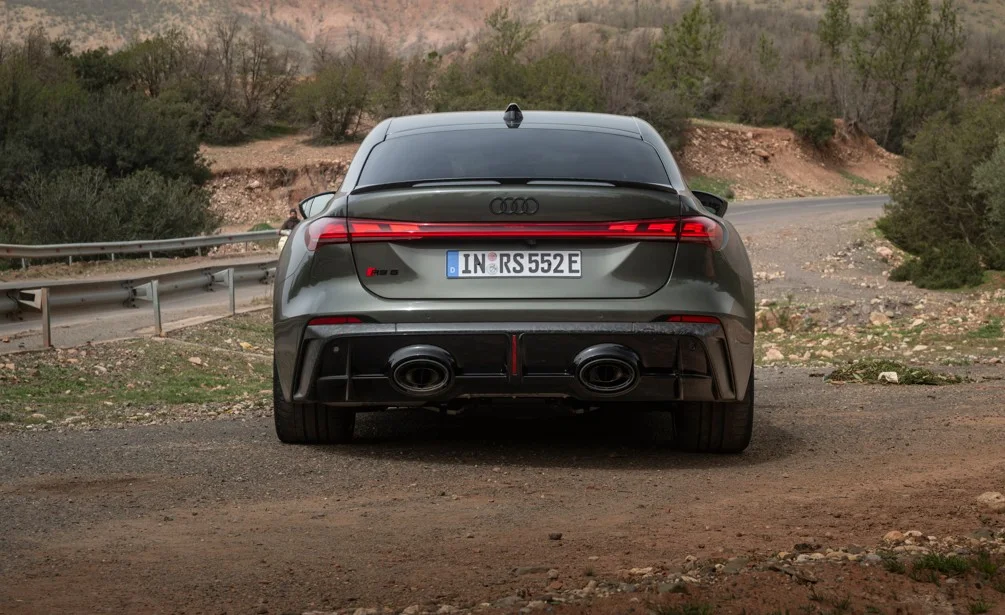
Underneath that muscular bodywork sits a powertrain that is part traditional muscle and part science experiment. The familiar 2.9-litre twin-turbo V6 is still there, but it now works in tandem with a 174hp electric motor to produce a total system output of 630hp and 590lb ft of torque. To manage all that grunt, Audi has fitted an electrified dynamic torque vectoring system that can shuffle power between the rear wheels in just 15 milliseconds. It is a hi-tech solution to the problem of physics, designed to make the Audi RS5 feel like a much smaller, lighter machine than the spec sheet suggests.
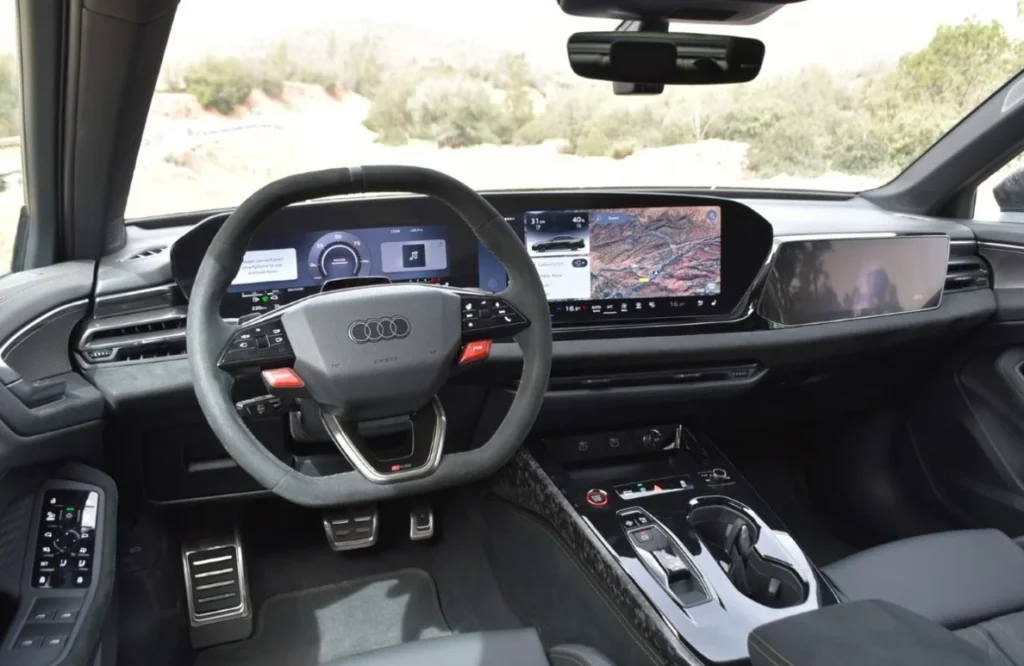
The interior is typical Audi, which is to say it is mostly excellent, though I did find some of the secondary plastics a bit scratchy for a car at this price point. You get a massive 14.5-inch OLED touchscreen and a passenger display that seems largely designed to give your co-driver something to look at while you are trying not to fall off a cliff. Thankfully, someone at Ingolstadt listened to the critics and brought back physical scroll wheels on the steering wheel, which are far easier to use than those awful haptic touchpads. The seats are superb, offering enough support to keep your internal organs in place during hard cornering while providing a massage function for the cruise back to the hotel.
Real-world driving and the RS5 experience
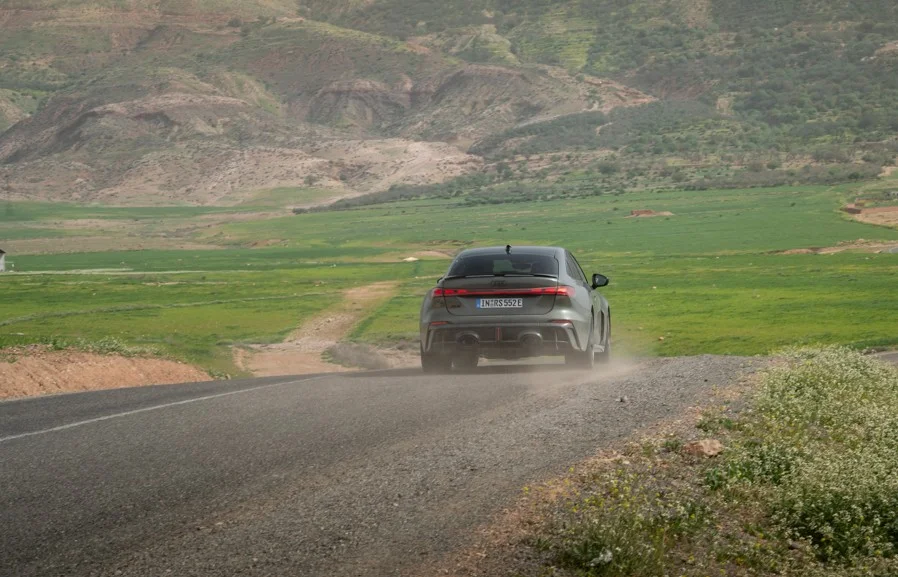
On the winding, broken tarmac of the Atlas Mountains, the Audi RS5 reveals itself to be a devastatingly effective tool for covering ground. The steering is fast and the grip from the bespoke Pirelli rubber is nothing short of heroic, allowing you to carry speeds that would be genuinely terrifying in a lesser car. There is no turbo lag because the electric motor fills in the gaps, providing a linear surge of acceleration that pins you into the leather pews. It handles its 2,355kg mass with a level of composure that borders on the supernatural, even if you are always aware of the sheer momentum you are carrying.
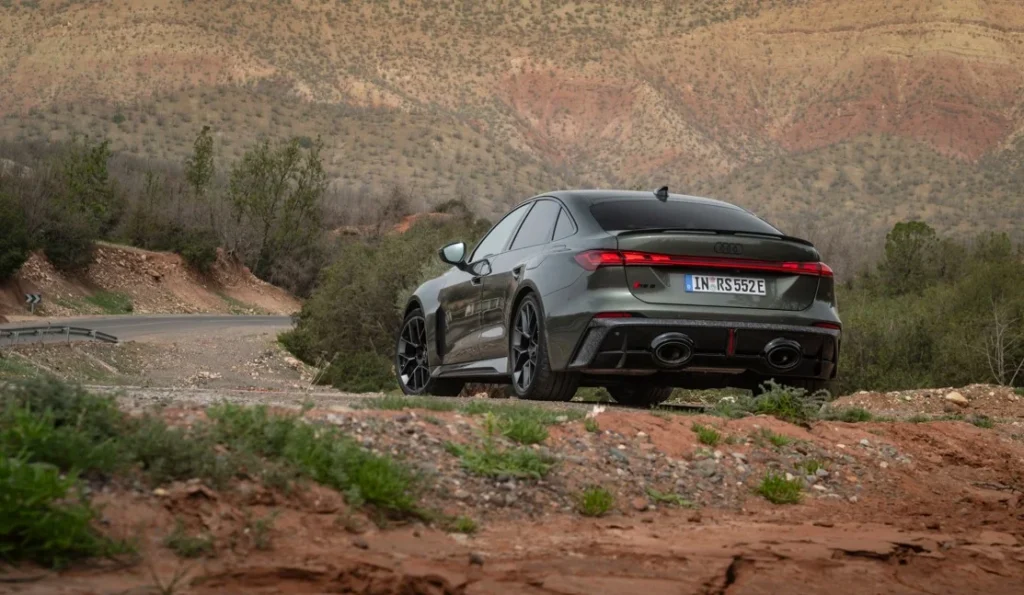
Living with the car daily would be an interesting exercise in compromise, primarily because the hybrid battery has eaten a significant chunk of the boot space. You get about 361 litres in the Avant, which is fine for a weekend bag but might struggle with a full family holiday’s worth of gear. On the flip side, the ability to glide through a city in near-silence for up to 52 miles in electric mode is a genuine luxury. When you want to be a hooligan, the RS Torque Rear mode allows for some surprisingly indulgent oversteer, proving that the Audi RS5 hasn’t lost its sense of humor in its pursuit of efficiency.
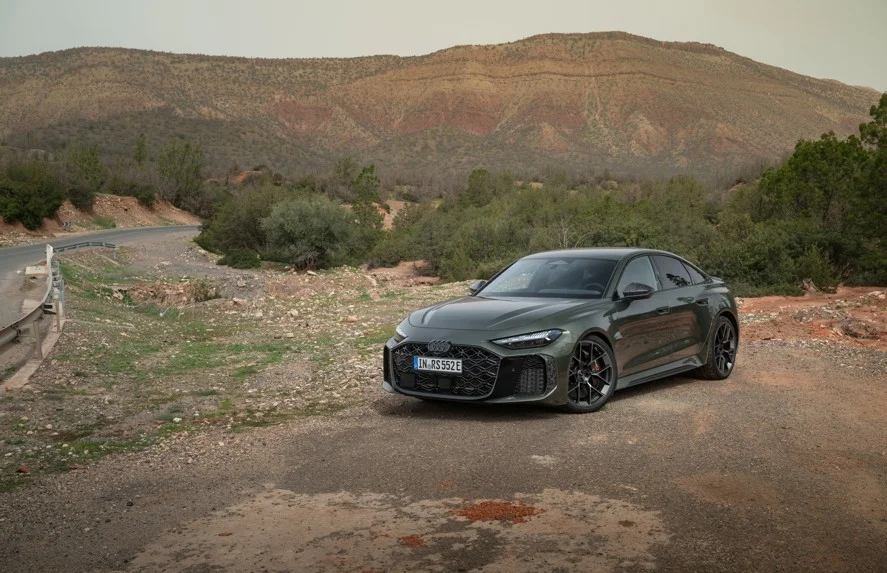
For the driver who wants a one-car solution that can handle the school run in silence and a track day with aggression, this is a compelling package. It is not as pure as an Alfa Romeo Giulia Quadrifoglio, nor is it as surgically precise as a BMW M3, but it has a broader range of talents than both. The ride quality on the clever twin-valve dampers is impressive, soaking up the worst of the Moroccan road rash without ever feeling floaty. It is a car that rewards a tidy driving style but has enough electronic wizardry to save you if your ambition outweighs your talent.
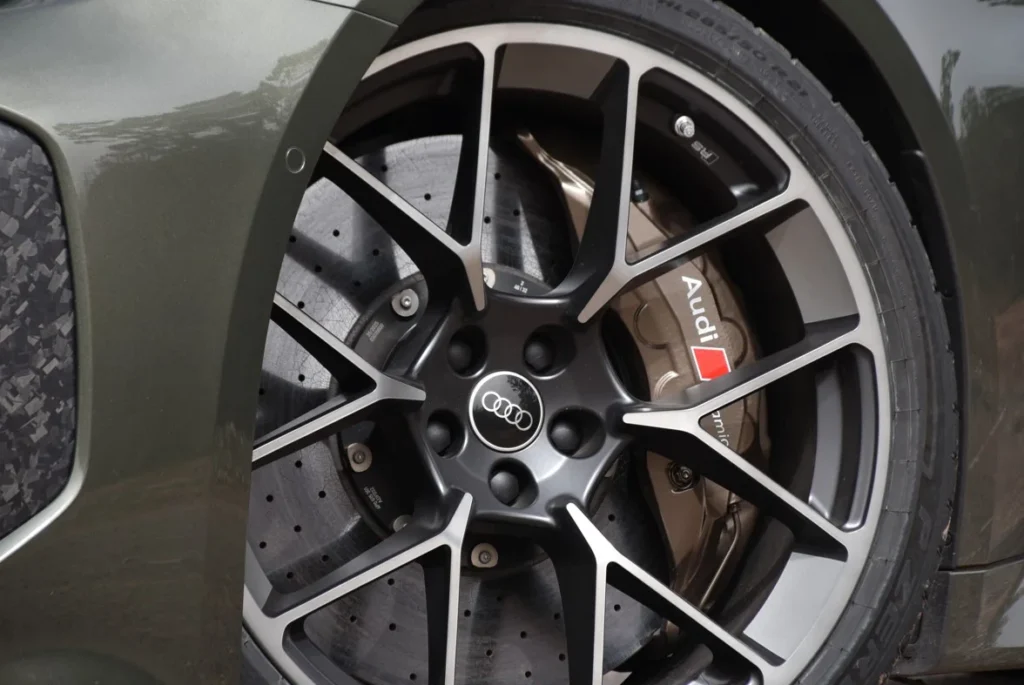
Despite the portly figure on the scales, the Audi RS5 is a triumph of engineering that feels genuinely exciting to drive. It uses its 630hp to bridge the gap between efficiency and madness, proving that the 2.9-litre twin-turbo V6 still has plenty of life left in it. Audi has refined the electrified dynamic torque vectoring to the point where the weight is often secondary to the sensation of speed. In a world of clinical EVs, the Audi RS5 uses its 2.9-litre twin-turbo V6 and electrified dynamic torque vectoring to ensure it stays high on the list for real enthusiasts. It is a 630hp brute that uses its electrified dynamic torque vectoring and 2.9-litre twin-turbo V6 to conquer the road. The 630hp output combined with the 2.9-litre twin-turbo V6 makes the Audi RS5 a technical marvel of electrified dynamic torque vectoring. By blending 630hp with the 2.9-litre twin-turbo V6, Audi has created a machine where the electrified dynamic torque vectoring truly shines. The 630hp peak and the 2.9-litre twin-turbo V6 work together with the electrified dynamic torque vectoring to deliver a masterpiece.
latest Stories
 Read full story

Join Our Community
Stay up to date with our latest stories, fresh insights, and special updates. Subscribe to receive carefully selected content delivered straight to your inbox.