


Aston Martin Valhalla Spider keeps its roof-off ambition firmly on the limit

Nick Perry
Author of the post
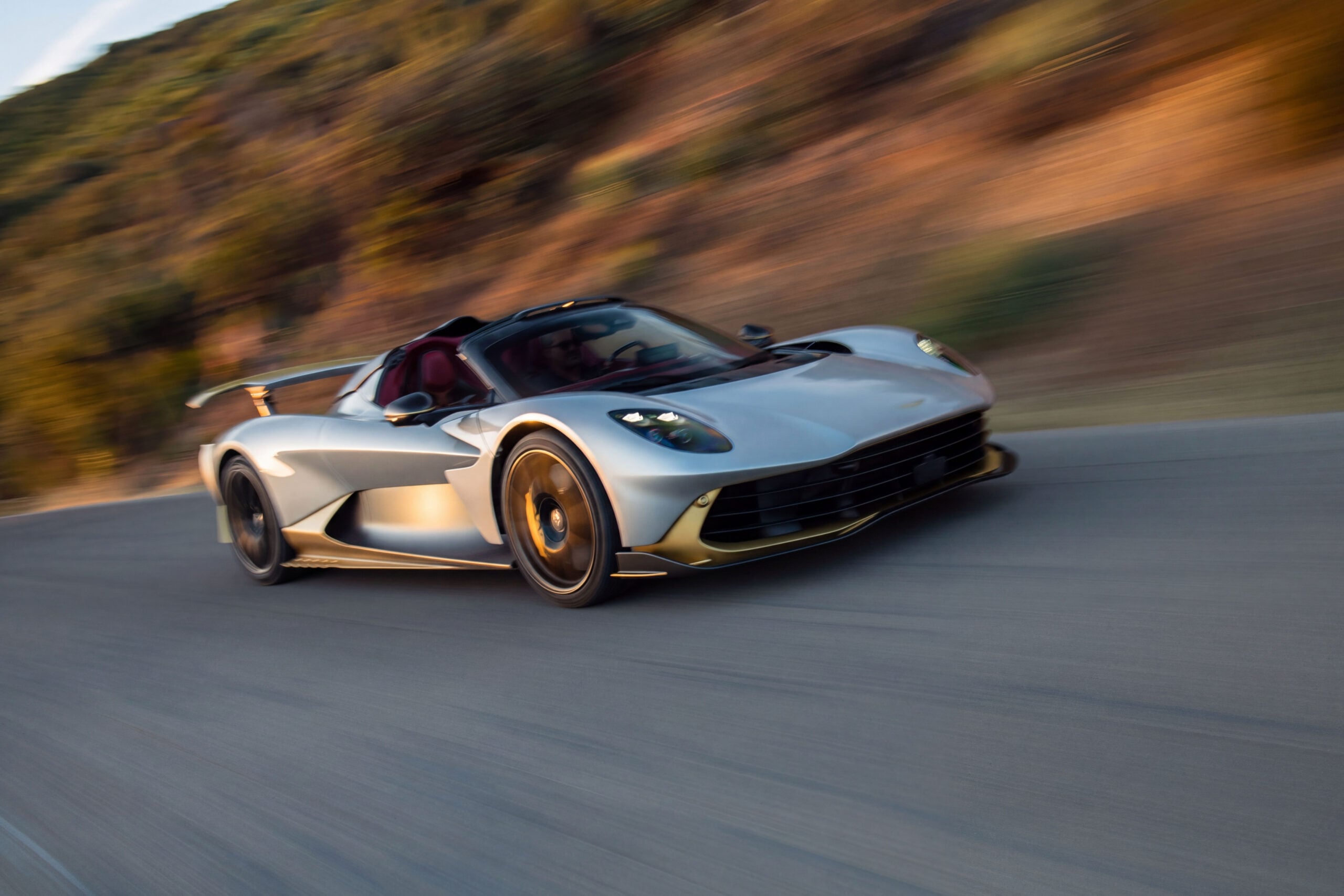
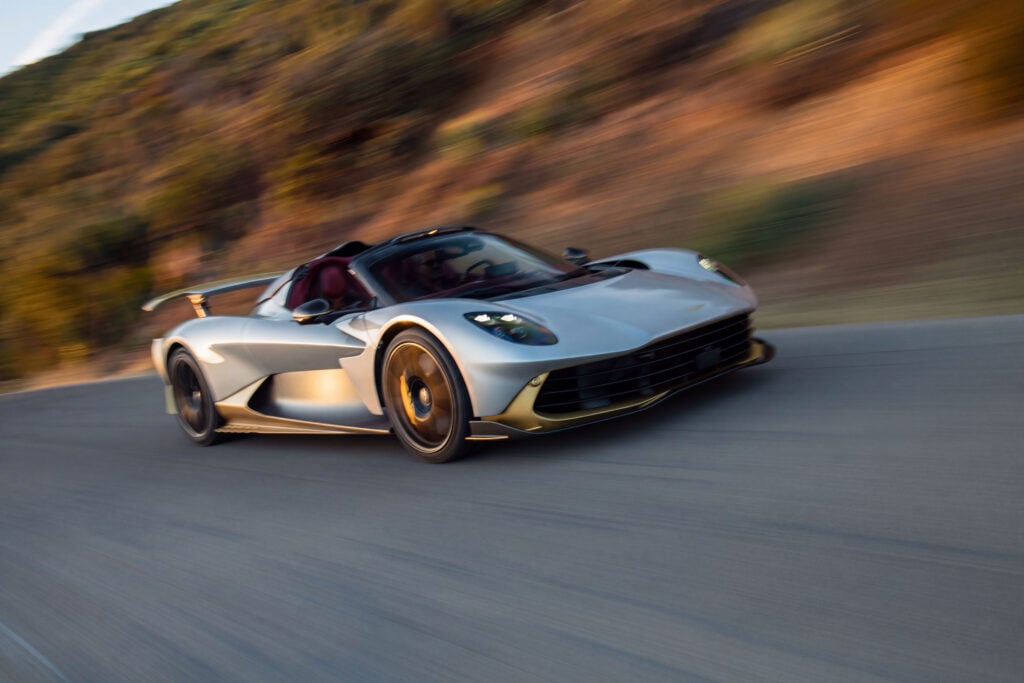
Aston Martin has revealed the Valhalla Spider, an open-cockpit version of its mid-engined plug-in hybrid supercar that promises to retain the coupe’s headline performance with the roof either fitted or removed. Deliveries are scheduled to begin in the third quarter of 2027.
The important claim is not merely that the Valhalla can go very quickly without a roof, because plenty of expensive convertibles can manage that. Aston Martin says the Spider can reach its electronically limited 350km/h maximum speed roof-off, making it the fastest open-cockpit Aston Martin it has produced.
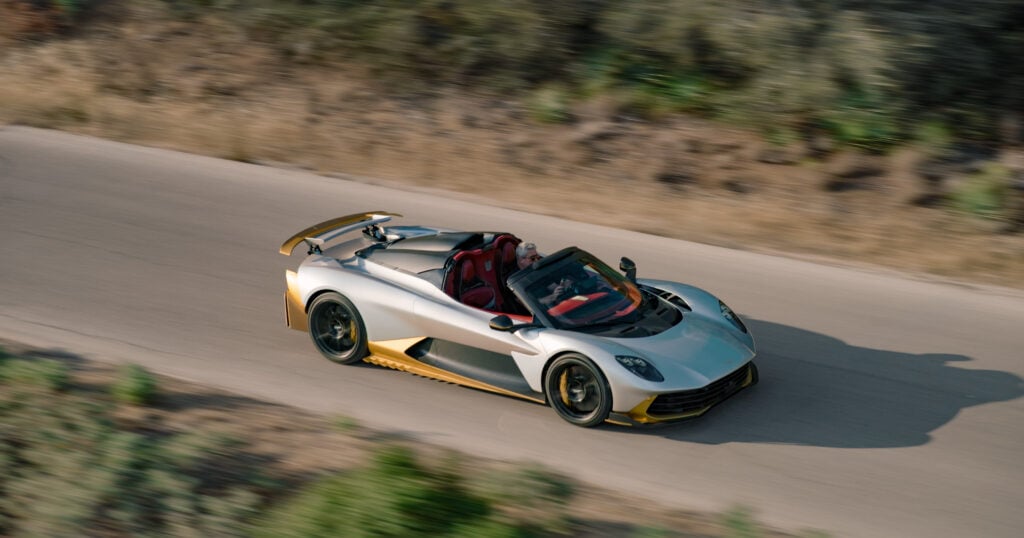
It shares the coupe’s 1,079PS plug-in hybrid powertrain, combining an 828PS 4.0-litre twin-turbo flat-plane-crank V8 with three electric motors contributing a further 251PS. Total torque is quoted at 1,100Nm, while Aston Martin predicts 0-100km/h in 2.5 seconds. Those figures place the Spider squarely in hypercar territory, even if its mission remains that of a road-going Aston Martin rather than a stripped-out track special.
A roof system designed around the 350km/h claim
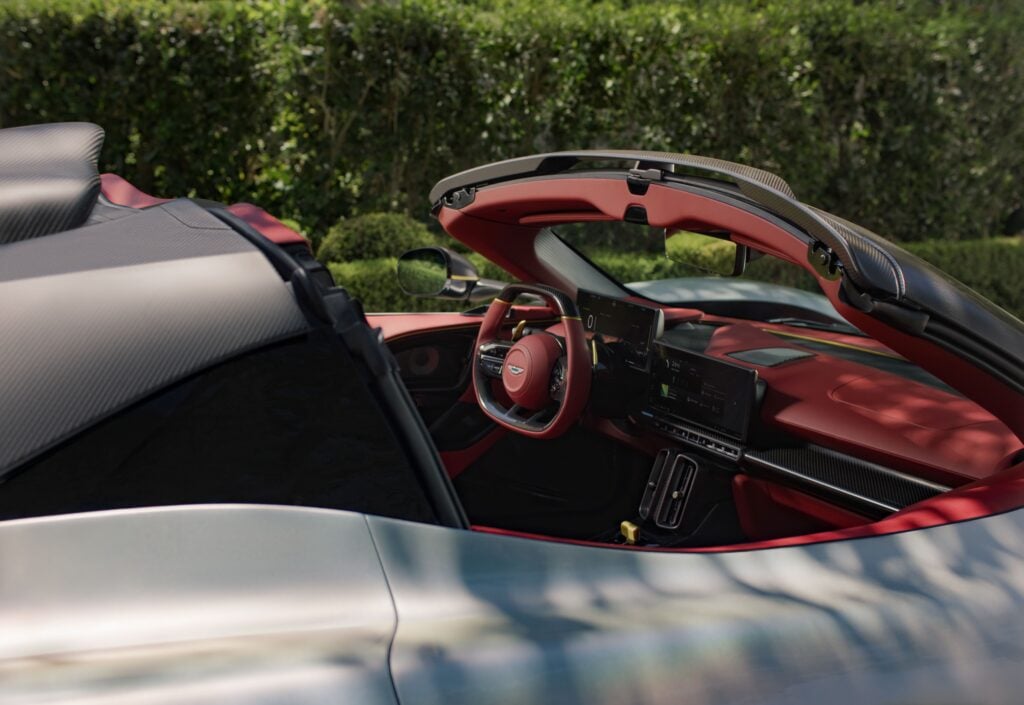
The standard roof is a removable black fabric item, stowable when not required. With it fitted, Aston Martin says the Valhalla Spider can reach 200km/h. An optional carbon-fibre hard top allows full roof-on access to the 350km/h limit, and will be standard in the United States. A static rain cover is also included.
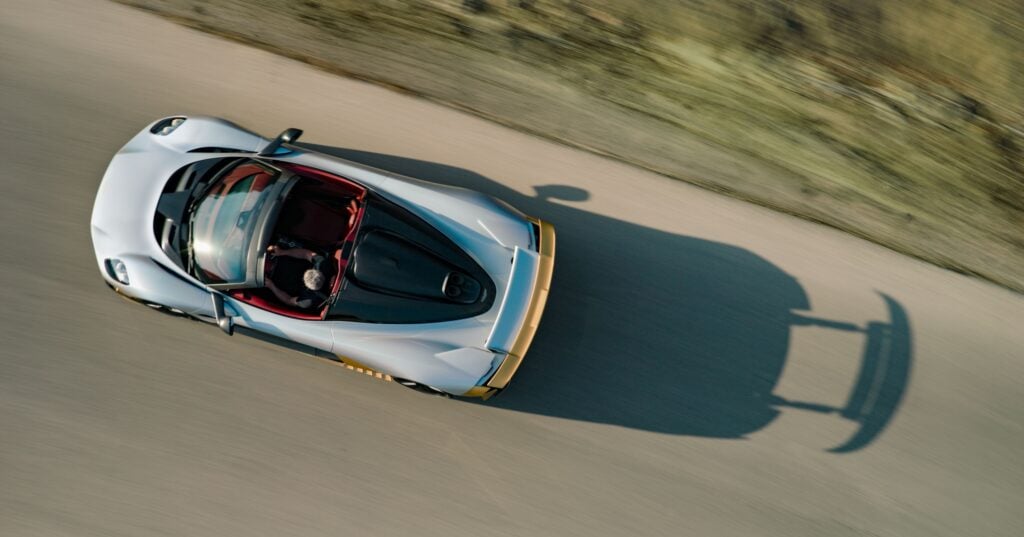
Removing a roof from a car developed around extreme aerodynamic loads is rarely a matter of simply reaching for a saw. Aston Martin has revised the active-aero and electronic stability programme calibrations for the Spider, with the systems adapting to roof-on and roof-off airflow conditions. The company claims maximum downforce still exceeds 600kg when the roof is fitted.
A bespoke wind deflector clips into place behind the windscreen header with the roof removed. Aston Martin says it directs cooling air towards the intake snorkel while lifting airflow over the occupants. That snorkel is unique to the Spider, sits 35mm higher than the coupe’s and has been reshaped for the open car. The deflector folds into three sections for storage in new 15-litre sill compartments.
The Spider retains the Valhalla’s carbon-fibre monocoque, aluminium front and rear subframes, and carbon-fibre body panels. Aston Martin quotes a dry weight of 1,680kg with lightweight options, although it has not stated a directly comparable figure for the coupe in this announcement. The car measures 4,728mm long, 2,208mm wide including mirrors and 1,233mm high.
Hybrid hardware, torque vectoring and a more accommodating seat
The powertrain sends V8 and rear electric-motor output through an eight-speed dual-clutch transmission and electronically controlled rear differential. Two further electric motors drive the front axle, allowing electric torque vectoring across the front wheels. There is no mechanical connection between the front and rear axles, with Aston Martin’s Integrated Vehicle Dynamics Control system coordinating the powertrain, suspension, brakes, steering and active aerodynamic systems.
Suspension consists of front double wishbones with pushrod-operated inboard springs and dampers, plus a multi-link rear arrangement. Bilstein DTX adaptive dampers are standard, alongside carbon-ceramic brakes with 410mm front discs and 390mm rear discs. The Spider rides on 20-inch front and 21-inch rear forged wheels, wearing bespoke Michelin Pilot Sport S 5 tyres.
Four driving modes are offered: Sport, Sport+, Race and EV. Aston Martin has not provided electric-only range, fuel economy or emissions figures, noting that homologation remains outstanding.

There is a small practical concession to the realities of a roofed cockpit. A new carbon-fibre Touring Seat is standard, intended to improve comfort and ease of entry and exit when the roof is in place. Buyers who prefer greater support can specify the coupe’s existing carbon-fibre seat at no extra cost.
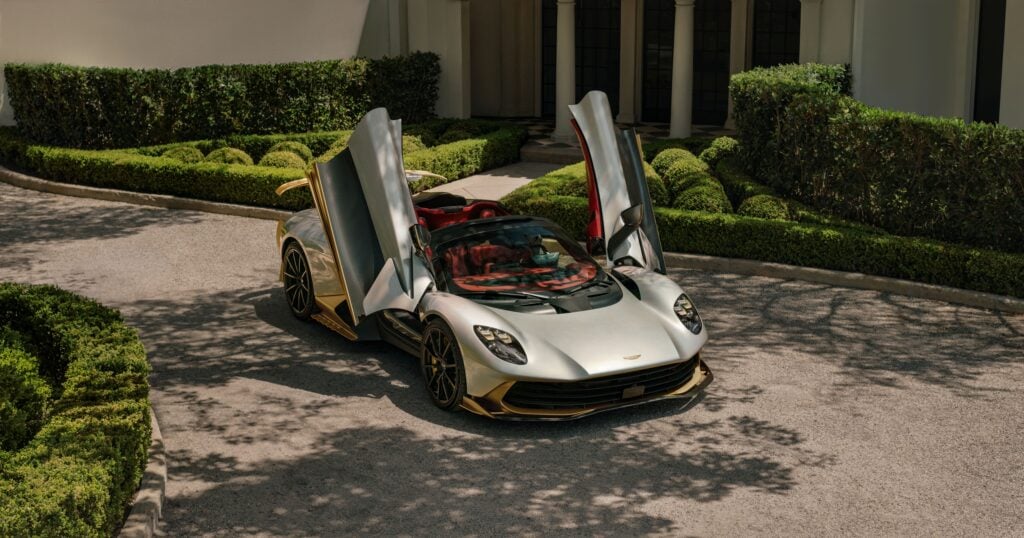
The dihedral doors remain, though Aston Martin says their mechanism has been refined for smoother operation and the doors now use frameless glass. It is a suitably theatrical detail on a car whose engineering brief appears unusually uncompromising: preserve the closed car’s performance envelope, then let the sky in. Whether the promised consistency between roof-on and roof-off driving survives scrutiny will have to wait until the Valhalla Spider reaches the road.
latest Stories
 Read full story

Join Our Community
Stay up to date with our latest stories, fresh insights, and special updates. Subscribe to receive carefully selected content delivered straight to your inbox.